What to wear deep sea fishing: Essentials for a comfortable offshore day
Share
When you're figuring out what to wear deep sea fishing, stop thinking in terms of a single outfit. Think of your clothes as a high-performance system. The only strategy that truly works offshore is layering with moisture-wicking fabrics, because it lets you adapt on the fly to whatever the ocean decides to do. It’s the key to staying comfortable, dry, and protected from sun, wind, and spray.
Your Deep Sea Fishing Clothing System
Dressing for a day on the open ocean is like packing for three different seasons at once. A calm, glassy morning can turn into a windy, spray-soaked afternoon in a heartbeat. The secret to handling it isn't one perfect jacket, but a smart, three-part clothing system you can adjust as the day unfolds. This system is built on moisture management, insulation, and protection.
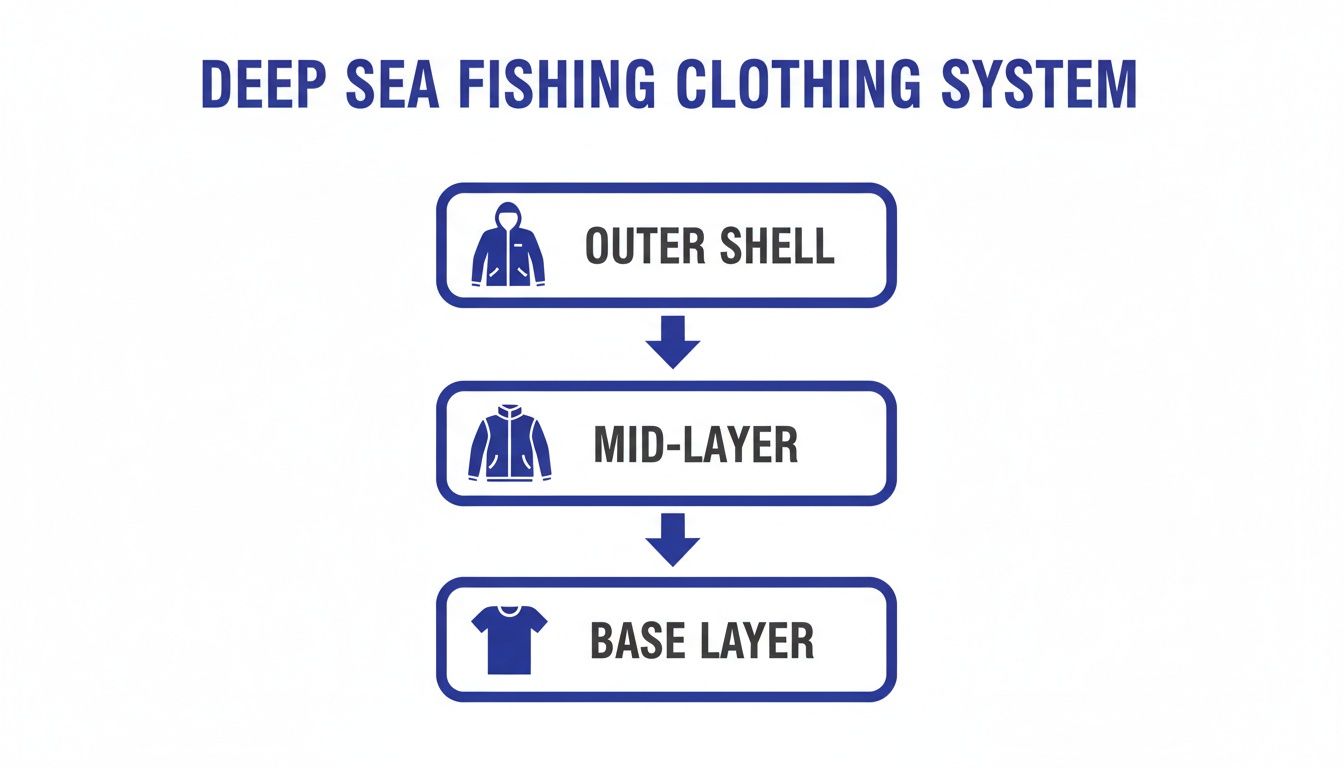
The three core layers—a base, a mid, and an outer shell—all work together to keep you dry from the inside out and regulate your body temperature. Each layer has a specific job, and when you get it right, you’re building a reliable defense against the elements. It's a proactive approach more and more anglers are taking seriously; in fact, the global fishing apparel market is projected to hit USD 26.32 billion by 2030 as people invest in specialized gear that genuinely improves comfort and safety. You can get a deeper look at this trend and the evolution of fishing-specific gear in the full report from Grand View Research.
The Three Essential Layers
Think of your clothing as a team where each piece has a distinct role. A moisture-wicking base layer pulls sweat off your skin. An insulating mid-layer traps your body heat to keep you warm. And finally, a waterproof, windproof outer shell shields you from the rain, waves, and salt spray.
This diagram breaks down how that system comes together.

This visual shows exactly how each layer stacks to create a complete, adaptable barrier. By adding or shedding layers as needed, you stay in total control of your comfort all day long.
Key Takeaway: Success on the water isn't just about the right lure; it's also about the right layers. Mastering this system means you'll spend less time shivering and more time fishing, no matter what the ocean throws at you.
Building Your Foundation: The Base Layer
Every functional layering system starts with the piece of clothing right against your skin. This is your base layer, and it has one critical job that has nothing to do with warmth: managing moisture. Get this foundation right, and you'll stay comfortable and regulated all day long. Get it wrong, and nothing else you wear will matter.
A lot of rookies make the mistake of just grabbing a cotton t-shirt. There's a reason seasoned anglers have a saying: "cotton is rotten." Out on the water, cotton acts like a sponge, soaking up every bit of sweat and spray. Once it's wet, it clings to your skin, loses all its insulating power, and actively pulls heat from your body. It'll leave you feeling cold and clammy, even on a perfectly warm day.

Choose Moisture-Wicking Fabrics
Instead of cotton, you need materials that pull moisture away from your skin and spread it out so it can evaporate. This process is called wicking, and it's the secret to staying dry and comfortable when you're working hard on deck.
Your best bets for a base layer fall into two camps:
- Synthetic Fabrics: Materials like polyester and nylon are the undisputed champions of wicking moisture. They’re lightweight, tough as nails, and dry incredibly fast, making them the go-to choice for almost any deep-sea fishing scenario.
- Merino Wool: Don't sleep on this natural fiber, especially when the weather turns cooler. Merino is a workhorse—it can absorb up to 30% of its weight in moisture before it even starts to feel damp, and it has the added benefit of naturally resisting odor.
By choosing a high-performance base layer, you're creating a dry foundation that allows the rest of your layering system to function properly. It prevents chafing and keeps your body temperature stable as conditions shift.
What to Look for in a Base Layer
The right fabric is only half the battle. The fit and construction of your base layer are just as important for all-day comfort. You want a snug fit, something that sits close to your skin without feeling tight or restrictive. That close contact is what allows the fabric to do its job and wick sweat away efficiently.
Look for shirts with flatlock seams. These are designed to lie flat against your skin, preventing irritation and chafing during the repetitive motions of casting and fighting fish. In warmer climates, a lightweight, long-sleeved UPF-rated shirt like those in the Lake Pacific performance collection can pull double duty, serving as your only layer to manage sweat while giving you essential sun protection.
Winning the Battle Against Sun Exposure
On the open ocean, the sun isn't just warm; it's a direct, relentless force. That intensity gets amplified by the water's surface, which acts like a giant mirror, bouncing harmful UV rays back at you from every angle. Just slathering on sunscreen is like bringing a bucket to a firefight—it’s a start, but it’s not a complete strategy. Building a smart sun defense system with the right apparel is non-negotiable out there.
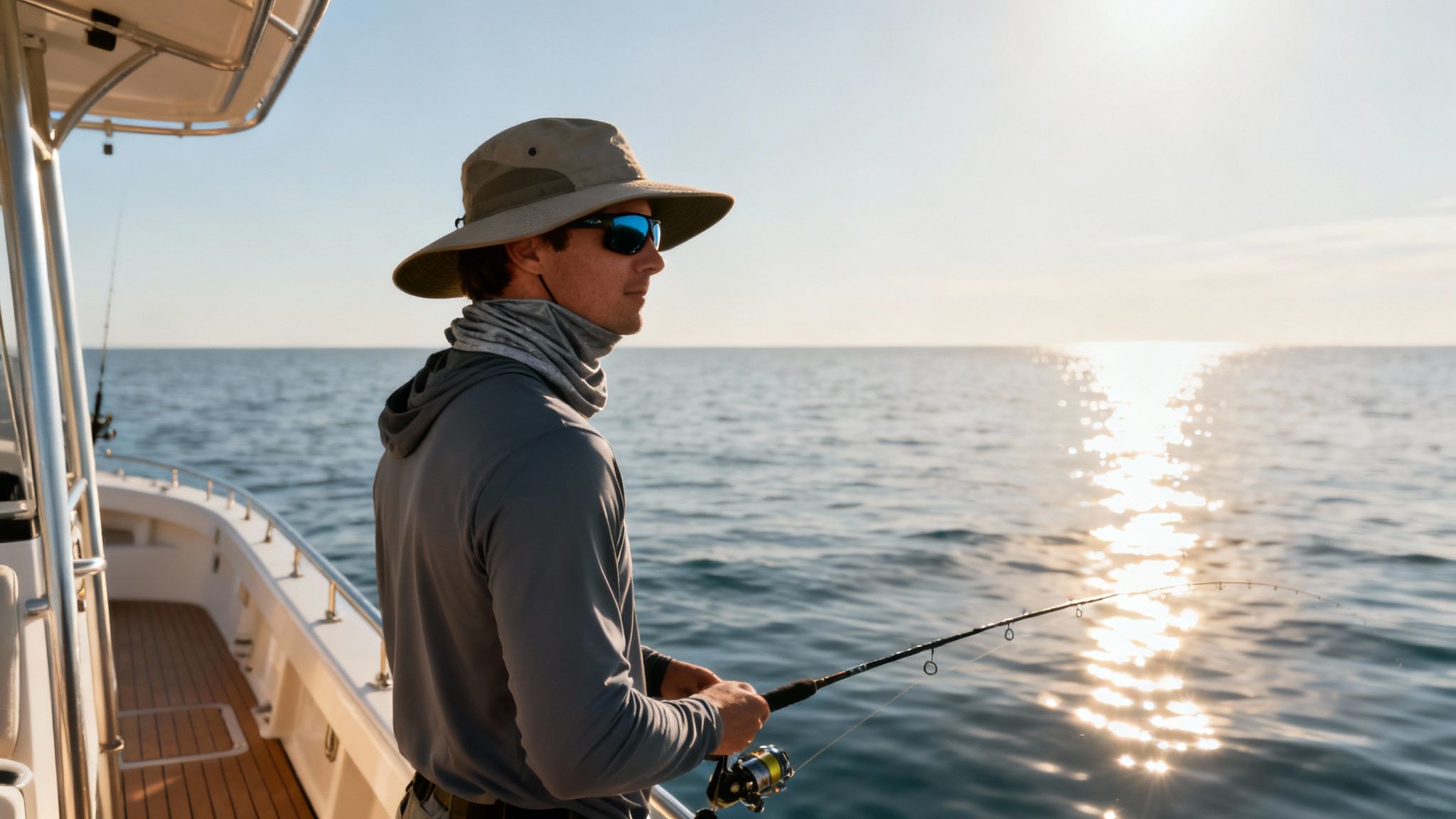
Your first line of defense should be a high-quality, long-sleeved performance shirt with a built-in Ultraviolet Protection Factor (UPF). Think of UPF as sunscreen woven directly into the fabric—it gives you consistent, all-day protection that won't sweat off or wash away. This is exactly why performance shirts have taken over the fishing world, holding a 45.50% market share as more anglers demand serious protection. The trend is obvious: over 63% of fishing enthusiasts now put UV protection and quick-dry tech at the top of their list.
Headwear: The First Level of Shade
Look, any hat is better than no hat. But your choice can make a huge difference in how protected you really are. A standard baseball cap leaves your ears, neck, and the sides of your face completely exposed—some of the first places to get scorched on a long day offshore.
For real coverage, you need a wide-brimmed hat. It creates a 360-degree shield, casting a shadow over your entire head, face, and neck. The best ones have a dark underbrim to cut the glare bouncing off the water and a chin strap to keep it locked down when the boat gets up to speed.
Essential Eye and Face Protection
Your eyes are just as vulnerable to sun damage as your skin. Investing in a pair of high-quality polarized sunglasses is one of the smartest moves any angler can make. Polarization is a filter that slices through the blinding glare coming off the water's surface.
This does two critical things:
- It saves your vision from eye strain and the long-term damage caused by harsh, reflected light.
- It helps you spot fish by letting you see through the surface glare, giving you a clear advantage.
Finally, don’t forget your face and neck. A lightweight sun gaiter or buff is an incredibly versatile piece of gear. You can wear it around your neck for basic coverage or pull it up over your nose and ears for maximum protection when the sun is beating down. Paired with a good hat and sunglasses, it completes your sun-blocking armor.
Choosing the right sun protection isn't just about comfort—it's about safety and endurance. A nasty sunburn can cut a trip short and poses long-term health risks. With a UPF-rated hoodie, a wide-brimmed hat, and polarized sunglasses, you stay protected, focused, and ready for whatever the ocean throws at you. You can find excellent examples in a well-curated collection of performance fishing sun hoodies.
Your Shield Against Wind and Water
Your outer layer is your personal fortress against the elements. When the wind picks up and salt spray starts flying, this is the gear that keeps you dry, warm, and focused on the action. Think of it as the armor that protects everything underneath, making sure your base and mid-layers can actually do their jobs.
Without a quality outer shell, wind can steal your body heat in minutes. A single wave over the side can soak you to the bone, ruining an otherwise perfect day. This is your primary defense out there, and choosing the right one is non-negotiable for deep sea fishing.

Waterproof Versus Water-Resistant
These terms get tossed around a lot, but for an angler, the difference is massive. Getting this right is the key to buying gear that won’t let you down when you need it most.
- Water-Resistant: This stuff can handle a light mist or a quick, minor splash. It’s usually made from a tightly woven fabric with a DWR (Durable Water Repellent) coating that makes water bead up and roll off. But in a steady rain or heavy spray, it’s going to soak through eventually.
- Waterproof: This is what you actually need for a real deep sea fishing trip. Waterproof gear is built to be an impenetrable barrier against water, even when you're getting hammered by it. It uses specialized membranes and, critically, taped or sealed seams to ensure absolutely no water gets in.
For any offshore adventure, always go for fully waterproof gear. A "water-resistant" jacket might be fine for a calm day on the lake, but it's just not enough for the unpredictable conditions of the open ocean.
Key Features of Quality Outerwear
Beyond just being waterproof, the best fishing jackets and bibs have specific design elements built for anglers. When you’re looking at what to wear deep sea fishing, you want features that add function, not just flair. An articulated hood, for instance, is designed to turn with your head, so you don't lose your peripheral vision when you're scanning the water or working on deck.
A common mistake is focusing only on keeping water out. True performance outerwear has to be breathable, too. It needs to let the moisture your body creates escape, otherwise you'll end up just as wet from your own sweat.
This breathability is what makes the whole layering system work. Your base layer wicks moisture away from your skin, and your outer shell lets that vapor pass straight through, keeping you dry from the inside out.
Look for adjustable cuffs to seal out spray and corrosion-resistant zippers that won’t fail after a few trips in the salt. A set of high-quality bibs and a matching jacket is the ultimate combination, giving you full-body protection against the harshest wind and waves. Investing in quality outerwear like this is your ticket to staying comfortable and fishing longer.
Choosing the Right Footwear and Accessories
The small details—what’s on your feet, hands, and in your pack—are often the unsung heroes of a good day offshore. A solid jacket keeps spray off your back, but the right footwear keeps you stable on a deck that’s constantly moving and almost always wet. This is no place for running shoes or flip-flops. You need gear built for the boat.
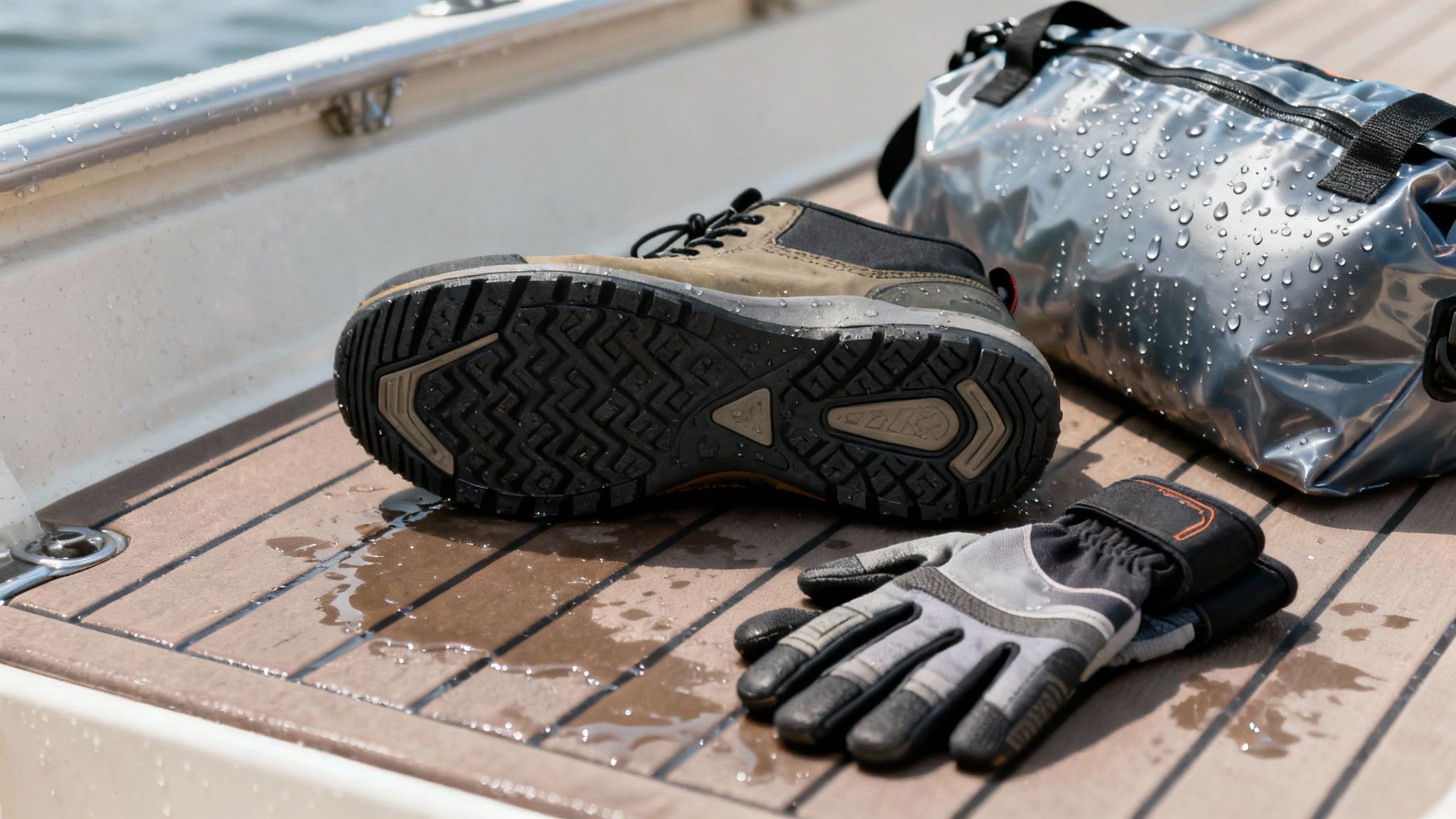
The first rule for footwear is a non-slip, non-marking sole. Fiberglass decks become incredibly slick with the slightest bit of water, and proper boat-safe footwear provides the grip you need to stay upright while fighting a fish or just moving around in a rolling sea.
Deck Boots Versus Boat Shoes
When it comes to what to wear on your feet, your two best options offer different strengths. The choice usually boils down to the conditions you’re expecting and what feels right for the day ahead.
- Deck Boots: For wet, messy, or cool conditions, nothing beats a good pair of deck boots. Made of rubber, they offer total waterproof protection, keeping your feet dry from spray, washdowns, and rain. They’re a must-have for winter fishing or any time heavy seas are on the forecast.
- Performance Boat Shoes: Modern boat shoes are a lightweight, breathable alternative. They’re designed with siped rubber outsoles that channel water away for exceptional traction. While they won’t keep your feet dry if a wave comes over the rail, they drain fast and are perfect for warm, sunny days.
Safety First: Regardless of style, make sure your footwear has a death grip on wet surfaces. A slip and fall on a boat can end a trip fast and lead to serious injury.
Essential Accessories for Comfort and Protection
Beyond your feet, a few other key pieces of gear will make a huge difference in your day. Fishing gloves, for example, do more than just help you handle a slippery fish. They provide crucial sun protection for your hands and prevent blisters after hours of casting and reeling.
A reliable dry bag is another non-negotiable item. Saltwater is corrosive and absolutely brutal on electronics. A quality dry bag is the only thing that will keep your phone, keys, and wallet completely safe from the inevitable sea spray and splashes.
Finally, don't forget your headwear. The right hat keeps the sun off your face and out of your eyes, which is critical for a long day scanning the water. You can explore a range of high-performance fishing hats from Lake Pacific designed to offer serious sun protection while staying put when the wind kicks up.
Your Ultimate Deep Sea Fishing Checklist
All the advice in the world doesn't help if you leave the right gear at home. Preparation is the final piece of the puzzle.
Think of this as your pre-launch scan—a final check to make sure you’re truly ready for whatever the ocean decides to throw your way.
Core Apparel and Layers
- Moisture-Wicking Base Layer: This is your foundation. A long-sleeved UPF performance shirt pulls sweat off your skin, keeping you dry and comfortable whether it's hot or cold.
- Insulating Mid-Layer: Even on a warm day, the temperature can plummet when the sun dips or the wind picks up. A simple fleece or lightweight hoodie is crucial for holding in warmth.
- Waterproof Outer Shell: Your foul-weather gear is non-negotiable. Quality rain bibs and a jacket are your best defense against spray, rogue waves, and unexpected downpours.
- Quick-Dry Shorts or Pants: Leave the cotton at home. Synthetics are king out here because they shed water and dry fast, preventing that cold, clammy feeling.
- Extra Socks: One of the most overlooked pieces of gear. A fresh, dry pair of wool or synthetic socks can completely change your outlook after getting your feet wet.
Footwear and Accessories
- Non-Slip Footwear: A wet deck is no place for bad shoes. Deck boots or dedicated boat shoes with non-marking soles are essential for staying upright and safe.
- Fishing Gloves: Save your hands. A good pair of gloves protects you from sun, blisters from a long fight, and nasty cuts from a braided line.
- Dry Bag: This is critical. A small, reliable waterproof bag keeps your phone, keys, and wallet safe from the salt and spray. It's cheap insurance for your most important items.
Saltwater is relentless on gear. It finds every crack and crevice and starts working to corrode metal and break down fabrics. After the trip, make sure you know how to care for fishing gear used in a saltwater environment to keep it performing season after season.
Sun and Personal Items
- Wide-Brimmed Hat: The sun offshore is intense and reflects off the water from every angle. A good hat offers 360-degree protection for your face, ears, and neck.
- Polarized Sunglasses: These aren't just for style. They cut the harsh glare, reduce serious eye strain, and actually help you spot fish beneath the surface.
- Sun Gaiter/Buff: Incredibly versatile, a gaiter protects your neck and face when the sun is beating down and can be pulled up for extra warmth when the wind kicks up.
- Reef-Safe Sunscreen: An absolute must. Bring a high SPF, water-resistant lotion and reapply it more often than you think you need to.
- Medication: Don’t forget any personal necessities. If you're even slightly prone to motion sickness, bring your remedy of choice—it’s better to have it and not need it.
Ultimate Deep Sea Fishing Packing Checklist
We've put everything together into a simple, scannable table. Use this as your final check before you head to the dock to ensure nothing critical gets left behind.
| Category | Essential Item | Key Feature/Purpose |
|---|---|---|
| Core Apparel | Moisture-Wicking Base Layer | Long-sleeve UPF shirt to manage sweat & block sun |
| Insulating Mid-Layer | Fleece or hoodie for warmth during temperature drops | |
| Waterproof Outer Shell | Rain jacket & bibs to stay dry from spray & rain | |
| Quick-Dry Bottoms | Shorts or pants made of fast-drying synthetics | |
| Footwear | Non-Slip Boat Shoes/Boots | Grippy, non-marking soles for safety on wet decks |
| Extra Socks | A dry pair for comfort (wool or synthetic) | |
| Accessories | Fishing Gloves | Protects hands from sun, blisters, and line cuts |
| Dry Bag | Keeps electronics, keys, and wallet safe and dry | |
| Sun Protection | Wide-Brimmed Hat | Full coverage for face, ears, and neck |
| Polarized Sunglasses | Cuts glare, reduces eye strain, spots fish | |
| Sun Gaiter/Buff | Versatile neck and face protection | |
| Reef-Safe Sunscreen | High SPF, water-resistant formula | |
| Personal Items | Necessary Medications | Including motion sickness remedies if needed |
With your gear dialed in and packed, you’re not just prepared for a day of fishing—you’re ready to focus on the experience, stay comfortable, and fish effectively from the first cast to the last.
Common Questions About Fishing Apparel
Even with a good plan, there are always a few lingering questions that pop up before a big trip. Getting these details right can be the difference between a great day on the water and a miserable one. Here are some straight answers to the questions we hear most often from anglers gearing up.
Think of this as fine-tuning your approach. Once these last few uncertainties are cleared up, you can step on the boat feeling confident and ready for whatever the ocean throws at you.
What to Wear for Colder Months
When the temperature drops, your layering system goes from important to absolutely critical. You have to start with a serious, moisture-wicking base layer—something like heavyweight merino wool is perfect because it insulates even when it gets a little damp. Your mid-layer needs to be a real workhorse for trapping heat, like a thick fleece jacket.
For your outer shell, there's no room for compromise: it has to be completely waterproof and windproof. A good set of insulated bibs and a matching jacket is the go-to combination for a reason. Don't forget your extremities, either. Insulated, waterproof boots, warm wool socks, a beanie, and waterproof gloves are non-negotiable for preventing dangerous heat loss.
Key Insight: In the cold, it's easy to lose over 75% of your body heat right through your head and neck. A warm hat and a neck gaiter aren't just for comfort—they're essential safety gear.
Do I Need Expensive Gear for a First Trip?
Not at all. For your first few trips, you can get by with what you already own. Just be smart about it. Dig out any non-cotton athletic wear you have for a base layer, grab a fleece for warmth, and use your best rain jacket as an outer shell. If you're going to spend money anywhere, make it a good pair of polarized sunglasses and safe, non-slip footwear. Those two things will make the biggest immediate difference.
Once you start fishing more regularly, you’ll naturally begin to see why dedicated fishing apparel is worth it. Features that sound like marketing fluff—high UPF ratings, advanced moisture-wicking fabrics, and saltwater-resistant zippers—genuinely make your time on the water more comfortable and your gear last much longer.
How to Care for Performance Apparel
To get the most out of your gear, you need to treat it right. The first rule is to always give it a quick rinse with fresh water after a day on the salt to get the corrosive stuff off. When you do wash it, use cold water on a gentle cycle with a detergent made for technical fabrics.
This next part is crucial: never use fabric softeners. They clog the microscopic pores in performance fabrics, completely ruining their ability to breathe and wick moisture. And always hang your gear to air dry. A high-heat dryer can destroy waterproof coatings and melt delicate synthetic fibers in a hurry.
Built for early mornings and long days on the water, Lake Pacific creates gear that performs when you need it and feels right everywhere else. Check out our collection of performance apparel and everyday essentials at https://www.lakepacificgear.com.