Fishing upf shirts: A Practical Guide to Sun-Safe Angling Gear

Fishing upf shirts: A Practical Guide to Sun-Safe Angling Gear

A good day of fishing usually means a long day under the sun. While that brilliant blue sky is part of the appeal, it comes with a serious, unseen risk. The sun’s ultraviolet (UV) radiation is relentless, and out on the water, its intensity gets cranked up as it reflects off the surface, hitting you from above and below.

This isn't just about avoiding a painful sunburn. Over time, that constant exposure adds up, leading to premature skin aging and, more importantly, a higher risk of skin cancer. For any serious angler, reliable sun protection is as fundamental as a good rod and reel. It’s a piece of gear, not an accessory.

The Modern Angler's First Line of Defense

This is where a quality fishing UPF shirt becomes non-negotiable. It’s engineered to do more than just cover your skin; it’s a technical solution to an environmental reality. Think of it as your first and most consistent line of defense, letting you focus on the fish, not the clock or the burn.

The rise of performance fishing apparel shows a real shift in mindset. Anglers now expect gear that actively helps them stay out longer and fish harder. The numbers back it up: the North American fishing clothing market is projected to hit USD 967.91 million by 2030. Shirts own a massive 45.50% share of that market, driven by anglers demanding high UPF ratings, moisture-wicking fabrics, and other features built for long days on the water. For a closer look at the market growth, you can find detailed statistics on Data Insights Market.

More Than Just a Shirt

Ultimately, choosing the right UPF shirt is an investment in your time on the water. It’s a practical decision that protects your health, extends your stamina, and lets you stay out chasing that next bite. A great day offshore is one where you come home with memories of the fish you caught, not a painful reminder of the sun you endured.

A quality UPF 50+ shirt blocks over 98% of harmful UV radiation, making it the most reliable shield for serious anglers who spend hours exposed to direct and reflected sunlight.

By understanding what makes these shirts work, you can gear up for countless successful trips, making sure every moment is spent enjoying the experience, fully protected.

Decoding UPF Ratings for Anglers

Think of Ultraviolet Protection Factor (UPF) as sunscreen that’s woven directly into your gear. It’s a physical barrier that doesn't wash off or wear out after a few hours, providing a consistent shield against the sun's most damaging rays. The rating itself is simple: it tells you exactly how much UV radiation the fabric blocks before it can reach your skin.

Out on the water, you’re dealing with a double threat. UVA rays penetrate deep, causing premature aging, while the shorter UVB rays are the culprits behind a nasty sunburn. A purpose-built fishing shirt is engineered from the ground up to defend against both.

What the Numbers Actually Mean

When you see a UPF rating on a shirt, it represents a fraction. A UPF 30 rating, for instance, means the fabric lets only 1/30th of the sun’s UV radiation pass through. That’s a blockage of 96.7%.

This diagram breaks down the key attributes of a high-performance fishing shirt, showing how protection, comfort, and on-water performance all work together.

A diagram illustrating fishing shirt attributes: protection, comfort, and performance benefits.

While sun protection is the main event, it's backed by smart design choices like breathability and an athletic fit. As the ratings climb, so does your protection—a critical factor when you're fishing offshore with the sun beating down and reflecting off the water's surface.

  • UPF 30: Good protection, blocking 96.7% of UV rays.
  • UPF 40: Very good protection, blocking 97.5% of UV rays.
  • UPF 50+: Excellent protection, blocking 98% or more of UV rays.

For anyone serious about their time on the water, the choice is clear. While UPF 30 is a decent starting point, the intense, amplified sun you face offshore demands a higher standard. That's why most dedicated performance fishing gear aims for the highest rating possible.

The Gold Standard for On-Water Protection

The highest and most reliable rating you'll find for sun-protective apparel is UPF 50+. This certification is the gold standard for anglers, boaters, and anyone who lives on the water. A shirt with this rating acts as a near-total sunblock for every part of your skin it covers, giving you true peace of mind from dawn until dusk.

A UPF 50+ rating means less than 2% of UV radiation can penetrate the fabric. This is your single most dependable defense against both immediate sunburn and long-term skin damage, letting you focus completely on fishing.

Unlike sunscreen, this protection won't sweat off or get washed away by an unexpected splash. It's built into the fabric's DNA, offering a permanent shield you can count on all day long. Investing in a UPF 50+ shirt isn't just about comfort—it's a smart, practical choice for your health. It’s one of the most important pieces of gear in your kit.

The Anatomy of a High-Performance Fishing Shirt
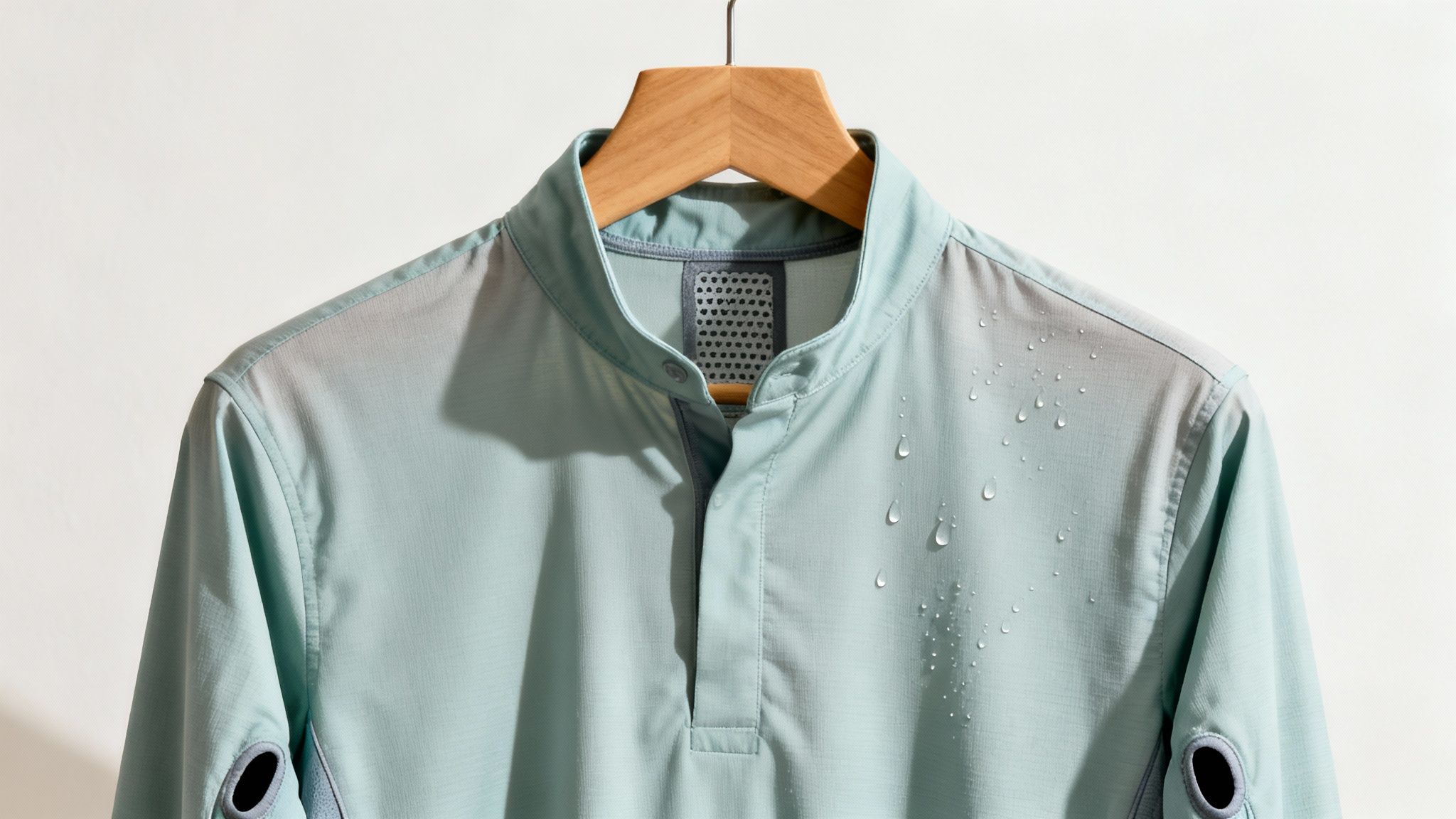
Knowing what a UPF shirt does is one thing. Understanding how it’s built is what turns you into someone who knows exactly what they’re buying. A truly exceptional performance shirt is more than just a piece of fabric—it’s an engineered system where every element serves a purpose. From the yarn to the seams, each detail contributes to your protection, comfort, and ability to stay focused on the water.

Light blue long-sleeve UPF shirt with water droplets showcasing its quick-dry and water-resistant fabric.

Let’s break down the trifecta of performance that separates the best shirts from the rest: the fabric it’s made from, the way it’s constructed, and the features designed specifically for anglers.

The Foundation: Performance Fabric

The material is the heart of any performance garment. A standard cotton tee might feel soft on the rack, but once it gets wet, it becomes a heavy, clammy mess that offers almost no sun protection. High-performance fishing shirts, on the other hand, rely on synthetic materials chosen for their specific advantages on the water.

  • Polyester and Nylon Blends: These are the workhorses of performance apparel. They’re inherently hydrophobic, meaning they don’t absorb water. Instead, they pull moisture away from your skin to the fabric’s surface, where it can evaporate quickly.
  • Spandex Integration: A small percentage of spandex (often called elastane) is blended in to provide crucial four-way stretch. This allows for an unrestricted range of motion, which is essential for repetitive actions like casting, reeling, and netting a fish.

This fabric technology is the engine behind the booming fishing apparel market. The North American sector is on track to hit USD 967.91 million by 2030, with performance shirts claiming a dominant 45.50% of that share. Anglers are driving this growth by demanding gear with UPF 50+ ratings that block 98% of UVA/UVB rays and quick-dry tech that can shed moisture 50% faster than standard materials. You can dig deeper into the global fishing apparel analysis to see the innovations pushing the industry forward.

Construction That Counts

How a shirt is put together is just as important as the material itself. The construction directly impacts both its UV-blocking ability and its comfort over a long day. Two things matter most: the weave of the fabric and the type of seams used.

A tighter weave physically reduces the space between threads, creating a more effective barrier against UV radiation. If you hold a cheap shirt up to a light, you can often see tiny gaps. In a high-quality UPF shirt, that same light will be almost entirely blocked—a simple test that reveals the density of its protective construction.

Flatlock Seams: Unlike traditional raised seams that can chafe and irritate your skin during repetitive movements, flatlock seams are stitched flat against the fabric. This small detail makes a huge difference in comfort, especially under the arms and across the shoulders, where movement is constant.

Angler-Specific Features

This is where thoughtful design truly shines. The best fishing shirts include features that solve the real-world problems anglers face, transforming a simple garment into an essential piece of equipment.

These purpose-built additions enhance everything from airflow to hand protection, demonstrating a deep understanding of what a day on the water demands. They are the final layer of engineering that makes a shirt a true performance tool.

A great shirt isn't just a collection of features—it's an integrated system designed to keep you comfortable, protected, and focused on fishing. Here’s a breakdown of what to look for.

Key Features of a Performance Fishing UPF Shirt

Feature What It Does Why It Matters for Anglers
Vented Back Panels Strategically placed mesh panels, often hidden under a cape-style back, allow heat and moisture to escape. This creates crucial airflow, preventing overheating during the hottest parts of the day or during strenuous activity.
Articulated Sleeves The sleeves are designed with a slight bend at the elbow, mirroring the natural shape of your arm. This ergonomic design prevents the fabric from bunching or restricting motion while casting, improving both comfort and performance.
Integrated Hood & Gaiter A built-in hood provides instant head and neck coverage, while some models include an attached gaiter for the face. This offers complete, seamless sun protection for the most exposed areas without needing separate accessories.
Thumbholes Small loops at the cuffs allow you to pull the sleeves over the backs of your hands. This simple feature keeps sleeves securely in place and provides vital sun protection for an often-forgotten area.
Antimicrobial Treatment The fabric is treated to inhibit the growth of odor-causing bacteria. It keeps your shirt smelling fresher for longer, a huge benefit on multi-day trips or in hot, humid conditions.

When you know what to look for in fabric, construction, and features, you can confidently choose a shirt that will stand up to the demands of any fishing adventure. To learn more about the science behind these fabrics, check out our guide on what moisture-wicking fabric is and how it works to keep you comfortable.

How to Choose the Right Fit and Style

A high-performance fishing shirt is an investment, but it only works if you get the fit right. The best cut isn’t about how you look—it’s about how it performs after six hours of casting, reeling, and moving around the boat. Your choice between a relaxed, athletic, or standard fit directly impacts airflow, how freely you can move, and whether you end up comfortable or annoyed.

Two men on a wooden dock by a lake, wearing UPF shirts and hats, one holding a fishing rod.

Finding the right balance is a trade-off between your personal comfort and what the day's fishing demands. Each style has its own clear advantages on the water.

Finding Your Ideal Cut

Think of fit as just another performance feature. A shirt that’s too tight restricts your cast and feels suffocating in the heat. On the flip side, one that’s way too loose will snag on gear, catch the wind, and just feel sloppy and heavy when it gets wet.

Let's break down the common options:

  • Relaxed Fit: This cut gives you the most room, hanging loosely off the body. Its main job is to provide maximum airflow, making it the go-to for brutally hot and humid days when ventilation is everything. It's perfect for more stationary fishing, like trolling or soaking bait, where a full range of athletic motion isn’t the top priority.
  • Athletic Fit: Built to stay closer to the body without feeling tight, this fit moves right along with you. It’s made with stretch fabrics that guarantee you have a full range of motion for active casting. The streamlined profile means less snagging on your reel handle, net, or anything else on the boat, making it ideal for fly fishing or sight casting.
  • Standard Fit: This is your versatile middle ground. It strikes a comfortable balance between the relaxed and athletic styles, giving you enough room to breathe while still letting you move easily. It’s a solid, all-around choice for most anglers and situations.

Your best fishing shirt is one you forget you're wearing. The right fit allows you to focus completely on the water, providing unrestricted movement and all-day comfort without binding, chafing, or snagging.

Ultimately, how you fish determines the best choice. If you need ventilation to survive a scorching day on the water, go for a relaxed fit. If your technique is all about precision and constant movement, an athletic cut will have your back.

From the Boat to the Shore

The best modern fishing gear is designed to be versatile. A well-chosen UPF shirt should look just as good at the dockside restaurant as it does on the water. This dual-purpose design means you get more value out of your equipment.

Pair your performance shirt with quick-dry shorts for a practical, ready-for-anything outfit. For total sun safety, don't forget a wide-brimmed hat and a good neck gaiter. You can check out different ways to wear one in our guide on how to wear a neck gaiter for full coverage.

By picking a style that fits your aesthetic—whether that’s a clean solid color or a subtle graphic—you’re getting a piece that works just as hard off the water as it does on it. This makes packing for trips simpler and ensures your most functional gear is also your most comfortable. Look for clean designs that don't scream "fishing gear" but deliver top-tier performance when it counts.

Maintaining Your High-Performance Gear

You wouldn’t neglect your reel after a day in the salt, and your performance apparel deserves the same respect. A high-quality UPF shirt is a piece of technical equipment, and just like any other gear, its performance depends on proper care.

Simply tossing it in with your regular laundry can break down the very features that protect you on the water. It’s not complicated, but following a few key steps will keep your shirt breathing, wicking, and blocking UV rays for years to come.

Washing and Drying Best Practices

The goal is simple: get the salt, sweat, and grime out without damaging the fabric’s technical structure or its UPF treatment.

  • Go with Cold Water: Always wash your UPF shirts in cold water on a gentle cycle. Hot water is the enemy of synthetic fibers, leading to shrinkage and a breakdown of the tight weave that keeps UV radiation out.

  • Choose a Mild Detergent: Stick with a gentle, liquid detergent. Powdered versions can leave residue that clogs the fabric's pores, killing its ability to wick moisture away from your skin.

  • Skip Fabric Softeners and Bleach: This is non-negotiable. Fabric softeners coat the fibers with a waxy film, suffocating the microscopic pores that pull sweat away. Bleach will straight-up destroy the fabric and its UPF rating, leaving you exposed.

How you dry the shirt is just as important as how you wash it. High heat from a machine dryer can cook the life right out of performance fabrics.

Pro Tip: The best method is the simplest: line dry your shirt in the shade. It’s the gentlest on the fabric, preserves the elasticity, and prevents any heat damage to the UPF finish. If you have to use a dryer, use the lowest heat setting or a no-heat, tumble-dry option.

Built for Durability and the Elements

Good UPF gear is designed to withstand the realities of fishing—abrasive salt, constant sun, and hard use. It’s no surprise that as anglers recognize the risks of sun exposure, demand for durable, protective apparel is growing.

This isn’t just about comfort; it's about health. With 1 in 5 Americans developing skin cancer by age 70, the prolonged exposure that comes with fishing makes protection essential. For the more than 50 million anglers in North America, shirts now hold a 45.5% market share in fishing apparel, driven by innovations like hydrophilic fabrics that move moisture far better than old-school cotton. You can learn more about the trends in North American fishing apparel and the tech behind them.

Your care routine is part of that durability equation. A quick freshwater rinse after a day in the salt prevents corrosive crystals from degrading the fabric over time—a simple step that adds seasons to your shirt’s life. For a deeper dive, check out our guide on how to care for fishing gear used in a saltwater environment. Protect your investment, and your gear will be ready to perform every time you are.

Making the Right Choice for Your Next Trip

You now have the intel to look past the marketing noise and see what really makes a performance fishing shirt an essential piece of gear. Choosing the right one isn't about finding a single "best" shirt out there. It's about finding the one that matches how and where you fish.

The decision balances conditions, activity, and personal style. A good fishing UPF shirt should feel like a trusted tool—reliable, comfortable, and built for the job. Before you pull the trigger on your next one, run through this quick gut check.

Your Decision-Making Checklist

Focus on these three factors to narrow down the field and find a shirt that’s truly built for your time on the water. Each one plays a critical role in your comfort and protection.

  • Your Environment: Are you fishing the humid flats of the Gulf or running through cool, misty mornings off the Pacific coast? Hot, sticky conditions demand serious breathability and a looser fit for airflow. Colder climates might call for a slightly heavier fabric you can layer effectively.

  • Your Activity Level: A long day sight casting from the bow requires an athletic fit with four-way stretch for total freedom of movement. If you’re trolling and soaking baits, a more relaxed, vented shirt might deliver better comfort for hours spent under the sun.

  • Your Personal Style: Good gear should work for you on and off the boat. Pick a design that transitions from the water to a casual dinner without skipping a beat. A clean, versatile style means you get more value out of the investment.

Investing in a high-performance UPF shirt is one of the smartest moves an angler can make. It’s not just about comfort; it's a commitment to protecting your health, extending your endurance, and making every moment on the water better.

Ultimately, the right shirt lets you forget about the sun and focus completely on fishing. It’s the gear that works behind the scenes, a reliable shield that lets you stay out longer, fish harder, and come home ready for the next trip. Choose wisely, and you'll have a dependable partner for countless adventures to come.

Answering Your Questions About Fishing UPF Shirts

Even after you know what to look for in a performance fishing shirt, a few practical questions usually pop up. We get them all the time from other anglers. Getting these details sorted out helps you get the most out of your gear and make smarter choices, both on the boat and back at the dock. Here are the answers to the questions we hear most often.

Does the UPF Rating Wash Out Over Time?

This is probably the biggest myth out there about performance apparel. The sun protection in a high-quality fishing UPF shirt isn't some chemical coating that’s going to wear off in the laundry. The UPF rating is built right into the fabric itself. It’s a combination of the material (like polyester), a super-tight weave that physically blocks UV rays, and sometimes UV-inhibiting dyes infused directly into the yarn.

If you care for it properly—think cold water washes and avoiding harsh chemicals—the UPF rating will hold up for the entire functional life of the shirt. The only way the protection really degrades is if the fabric gets visibly worn out, stretched, or torn, creating gaps for the sun to get through.

Think of it like a solid shield. As long as that shield is intact and doesn't have any holes, it’s going to stop the sun just as well on day one hundred as it did on day one.

Is a Wet UPF Shirt Still Effective?

Yes, but its effectiveness can drop slightly. When any fabric gets wet, water fills the tiny spaces between the fibers, which can make it a little more transparent to UV radiation. This can temporarily lower the UPF rating.

This is exactly where high-performance synthetic fabrics prove their worth. Materials like polyester and nylon are naturally hydrophobic—they don't absorb much water and they dry incredibly fast. A soaked cotton shirt loses nearly all its protective ability and turns into a heavy, soggy mess. A performance shirt, on the other hand, sheds water so quickly that the impact on its UPF rating is minimal. For any serious angler, that quick-dry capability is non-negotiable.

Can I Just Wear a Normal Long-Sleeve Cotton Shirt Instead?

Look, any layer is better than no layer at all, but a standard cotton shirt is a poor substitute for a true UPF garment. The difference is all in the construction of the fabric.

  • Cotton: Has a loose, porous weave. Just hold one up to a light, and you'll see right through it. That loose structure gives UV rays a straight shot to your skin, and its protective value plummets the second it gets wet.
  • Performance Synthetics: Are made with an incredibly dense weave. This tight construction physically blocks UV radiation from ever reaching you, creating a much more reliable barrier against the sun.

A typical white cotton t-shirt might only give you a UPF rating of 5 to 7—way below the UPF 30 minimum recommended for decent sun protection. For a long day on the water, there’s just no contest. A purpose-built fishing UPF shirt offers protection that’s in a completely different league.


Ready to gear up with apparel that keeps you protected from dawn to dusk? Explore the full collection of performance gear at Lake Pacific and find the perfect shirt for your next adventure. Shop now at https://www.lakepacificgear.com.

Back to blog