What is moisture wicking fabric? what is moisture wicking fabric explained
Share
Moisture-wicking fabric is a game-changer for anyone who spends time on the water. It’s engineered with one primary goal: to pull sweat away from your skin and push it to the fabric’s outer surface, where it can disappear fast.
Unlike old-school fabrics that just absorb moisture, wicking technology actively manages it to keep you dry, cool, and comfortable when it counts.
Understanding Moisture Wicking Fabric
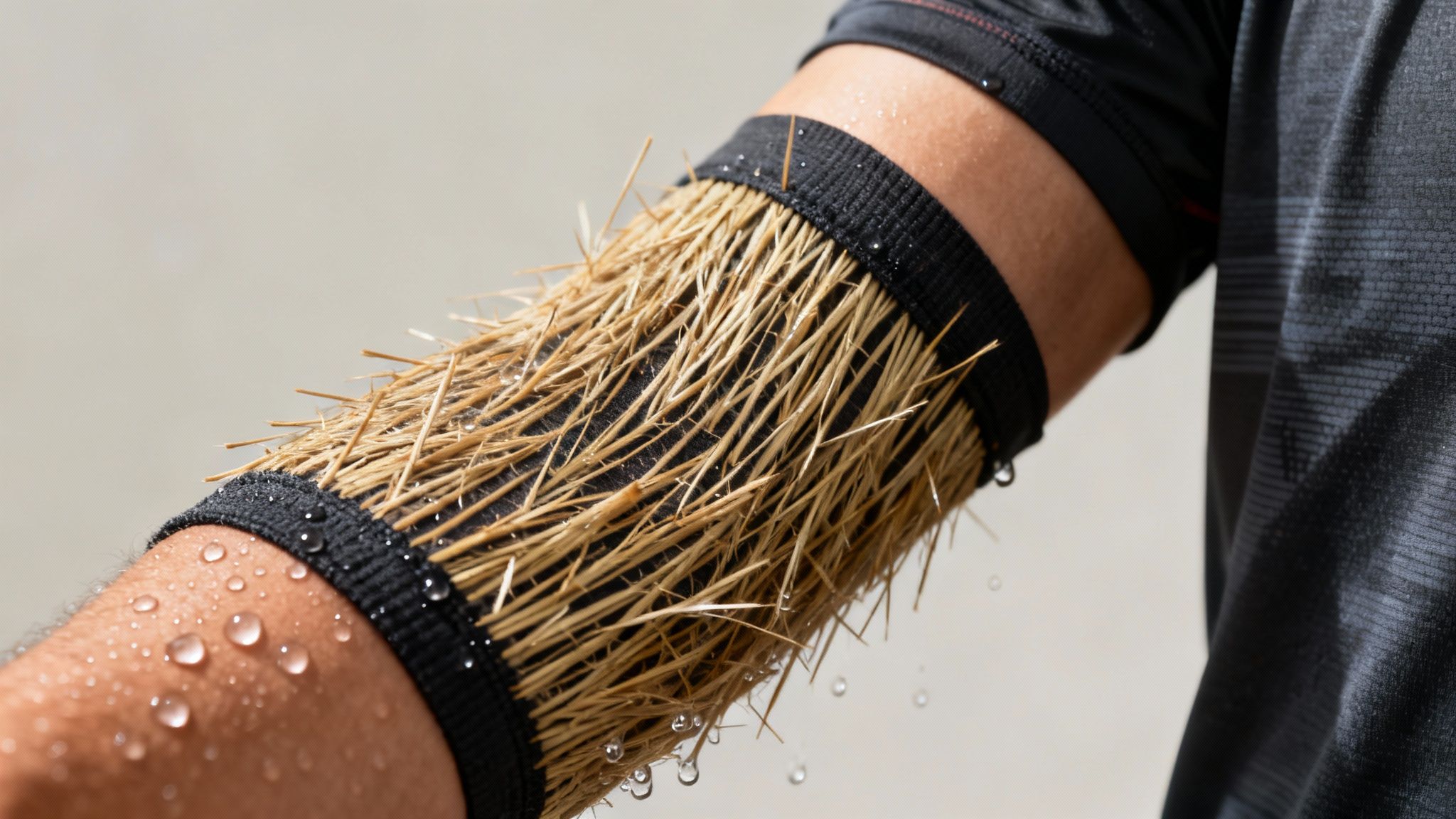
Ever finish a long day on the boat feeling damp, sticky, and weighed down by your shirt? That heavy, clammy sensation usually comes from fabrics like cotton, which act like a sponge. They soak up sweat and hold it right against your body, taking forever to dry and leaving you miserable.
Moisture-wicking fabric solves this exact problem with some smart science. Think of its fibers as a bundle of microscopic straws. Instead of absorbing sweat, these "straws" use a process called capillary action to suck moisture away from your skin and transport it to the outside of the garment. Once there, the moisture spreads out and evaporates almost instantly.
The Performance Difference
This technology is the reason your favorite fishing hoodie doesn't leave you soaked after reeling in a big one under the sun. By getting perspiration off your skin for rapid drying, it can slash the risk of heat stress by up to 30% in high-temperature environments. The market reflects this. Valued at USD 2.82 billion in 2024, it’s projected to hit USD 3.86 billion by 2029—a clear sign of its essential role in performance apparel. You can explore more data on the moisture-wicking fabric market's growth and see for yourself.
The core benefits of this process are clear and impactful for anyone active outdoors:
- Superior Comfort: It eliminates that sticky, heavy feeling of a sweat-soaked shirt.
- Temperature Regulation: By keeping your skin dry, it helps your body cool itself more efficiently in the heat and stay warmer in the cold.
- Reduced Chafing: Dry fabric is far less likely to cause skin irritation during repetitive movements like casting or hiking.
In essence, moisture-wicking fabric isn't just about feeling dry—it's about creating a personal microclimate that allows you to perform better and stay comfortable longer, no matter the conditions.
Here is the rewritten section, crafted to match the human-written style of the provided examples.
The Science Behind How Wicking Fabrics Work
Moisture-wicking fabric isn't magic, but it’s close. It’s a smart system built on two simple principles of physics that work together to pull sweat off your skin and keep you dry. To really get what makes performance gear work, you need to understand capillary action and the specific fibers used to build the fabric.
Ever dip the corner of a paper towel into a spill? You watch the water climb right up the towel, almost like it’s defying gravity. That’s capillary action, and it’s the engine driving any good wicking fabric.
Your performance shirt is woven with thousands of tiny, invisible channels between the fibers. When you start to sweat, that same force pulls moisture away from the high-pressure zone (your skin) and into the low-pressure channels of the fabric. It literally sucks the sweat right off you.
Hydrophobic Fibers: The Real Game-Changer
But just moving moisture isn’t enough. If the fabric absorbed all that sweat, you’d end up just as clammy and weighed down as you would in a cotton shirt. This is where the right materials make all the difference.
Most high-performance wicking fabrics are made from synthetic materials like polyester, which are hydrophobic—a fancy word that literally means “water-fearing.” These fibers are engineered to repel water, not soak it up. For perspective, polyester can only hold about 0.4% of its weight in moisture. Cotton, on the other hand, can hold up to 7%.
Combine the pull of capillary action with the push from hydrophobic fibers, and you get a powerful, one-way street for sweat. The fabric pulls moisture away from your skin, then actively shoves it toward the outer surface to evaporate.
Once the moisture hits the outside of the fabric, it spreads out across a much wider surface area. This is key because it massively speeds up evaporation, letting the shirt dry in a fraction of the time it would take cotton. This complete system is what separates true performance apparel from regular athletic clothing.
It's this constant cycle of pulling, pushing, and evaporating that keeps you comfortable and focused, whether you're fighting a fish in the heat or running the boat on a humid day. It’s a system designed to work with your body, not against it, so you can forget about your gear and focus on the water.
Exploring Common Moisture-Wicking Materials
Not every performance fabric is cut from the same cloth. The raw material is the heart and soul of any gear designed to manage moisture, and the best brands choose specific fibers for their unique strengths. Knowing what these workhorses are helps you understand exactly what you’re buying.
The world of moisture-wicking apparel is built on a foundation of powerful synthetic fibers. They're hydrophobic by nature—a technical way of saying they’re built to repel water instead of soak it up. This makes them perfect for moving sweat away from your skin.
The Synthetic Powerhouses
When you get into synthetics, a few key players show up again and again for their proven performance on the water. Each one brings something different to the table.
- Polyester: This is the undisputed champ of wicking fabrics. It’s incredibly durable, fights off stretching and shrinking, and offers solid UV protection. Most importantly, it absorbs only about 0.4% of its own weight in water, which means it stays light and dries out fast.
- Nylon: Known for its serious strength and elasticity, nylon is often blended with other fibers to add toughness and a comfortable stretch. While it’s a bit more absorbent than polyester, it still performs exceptionally well when you're working up a sweat.
- Polypropylene: Here's another hydrophobic star, valued for being extremely lightweight and a fantastic insulator. You'll often find it in base layers because it flat-out refuses to hold water, keeping your skin bone-dry.
These materials are the backbone of modern performance gear, chosen for their ability to handle the demanding conditions of fishing, boating, and life on the coast.
The Natural Performer: Merino Wool
While synthetics lead the charge, one natural fiber stands out from the pack: merino wool. Forget the itchy sweaters you remember from childhood. Merino fibers are incredibly fine and soft, so they feel great against the skin.
Merino wool has a unique trick up its sleeve. It can absorb moisture vapor (sweat before it even turns to liquid) into its core while the surface of the fiber stays dry to the touch. It then moves that moisture to the outside to evaporate. This clever process, combined with its natural antimicrobial properties, makes merino an awesome odor-resistant choice for multi-day trips.
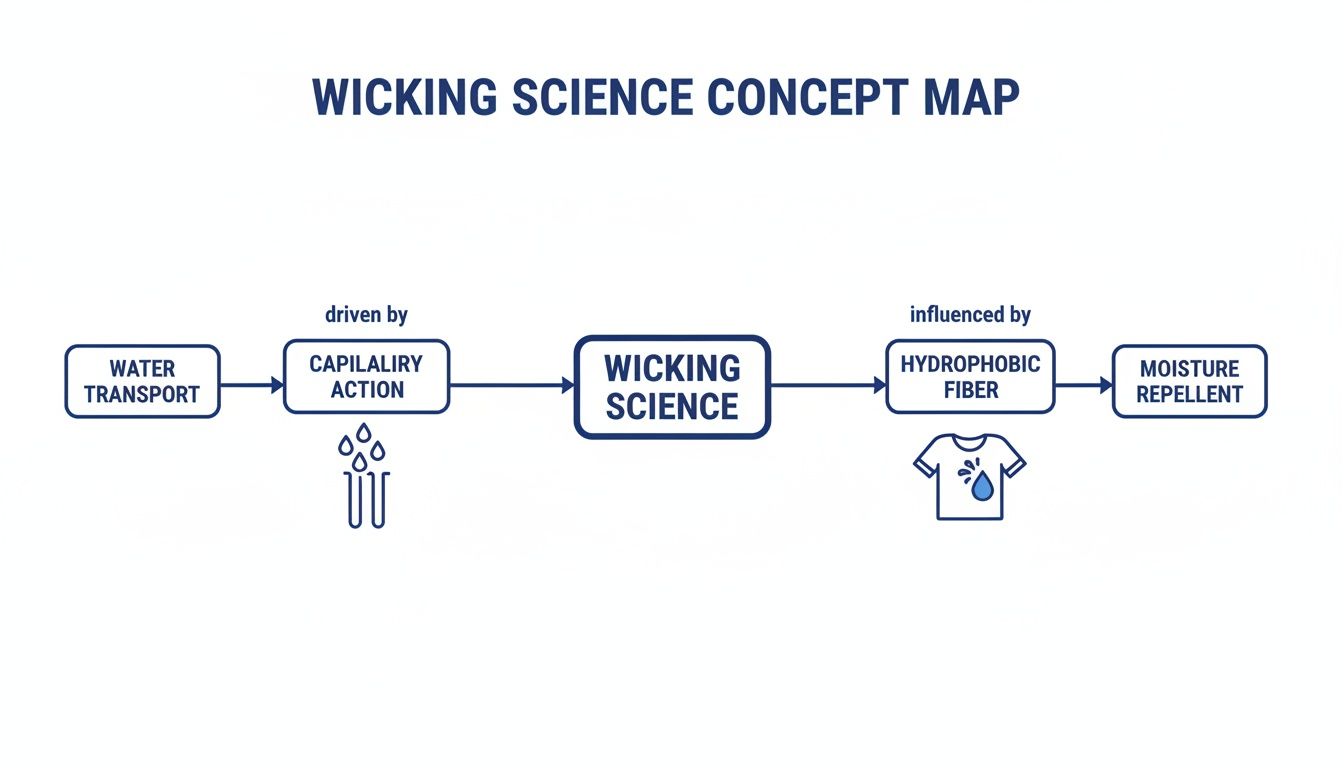
The science behind how these materials keep you dry is actually pretty straightforward.

As the illustration shows, it all comes down to capillary action pulling moisture away from your skin, while hydrophobic fibers actively push it toward the surface to evaporate quickly. It’s this one-two punch that defines high-performance apparel.
For anglers and boaters, that translates to all-day comfort, from the first cast to the ride back to the harbor. Today, polyester blends dominate about 60% of the performance apparel market, but natural options like merino are definitely gaining ground. You can learn more about the booming market for moisture-wicking fabrics and see just how much this technology has grown.
The Real-World Benefits For Anglers And Boaters
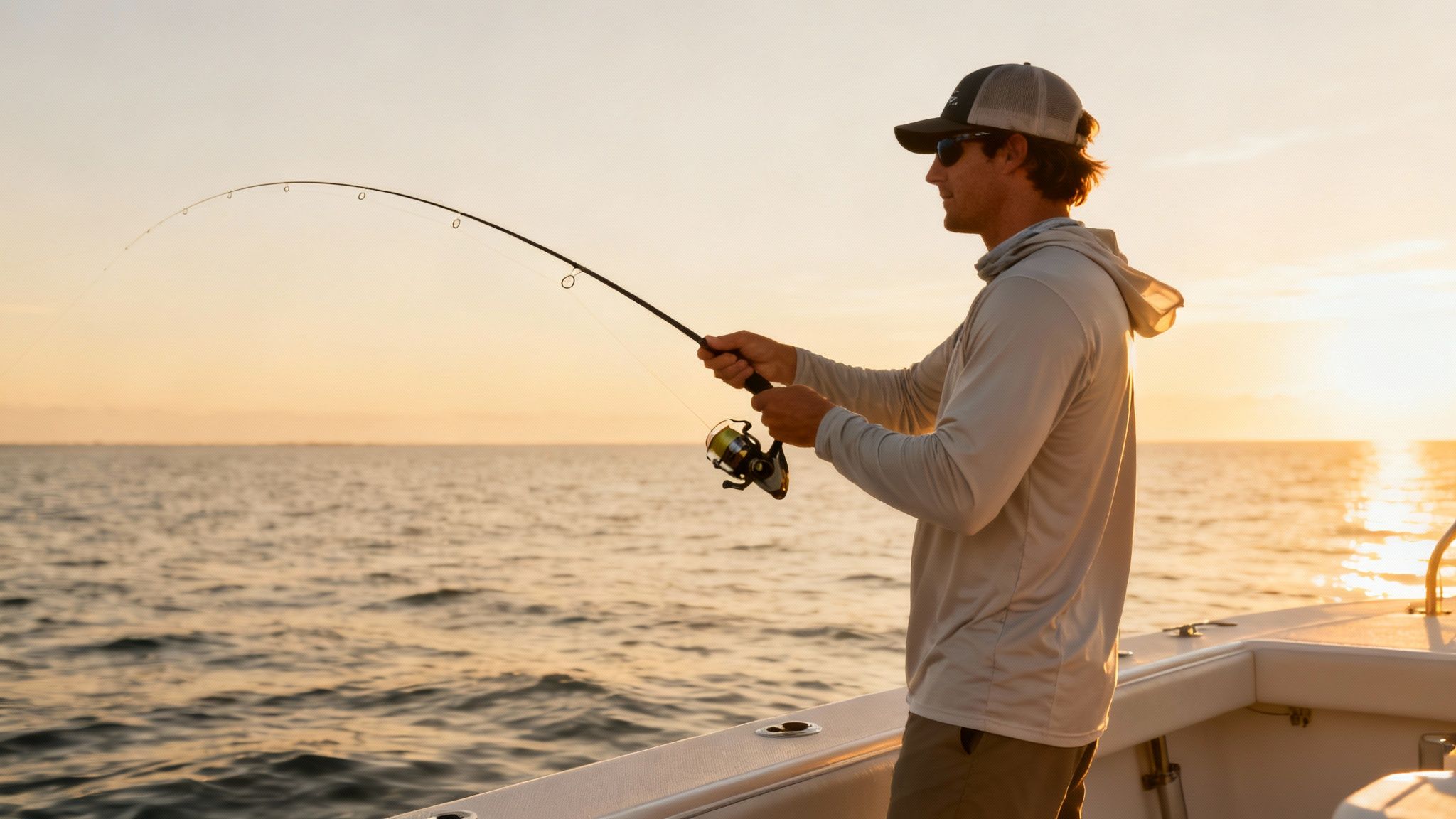
The science is one thing, but feeling the difference on the water is what really counts. For anglers and boaters, the benefits of moisture-wicking fabric are about more than just "staying dry"—they completely redefine a long, comfortable day on the water. This gear is your secret weapon against the elements.
Imagine you're casting under a hot sun. Instead of your shirt turning into a heavy, sweat-soaked blanket, it’s actively pulling that moisture away from your skin. You stay cool and light on your feet. That’s the core advantage: superior temperature regulation that adapts to your environment.
All-Day Comfort And Focus
When conditions shift, your apparel has to keep up. A sudden sea breeze or passing cloud can bring a quick chill, but if your base layer is dry, you stay significantly warmer. Moisture-wicking gear prevents that cold shock you get from damp fabric against your skin, helping your body maintain a stable temperature.
This constant dryness leads directly to better physical comfort. One of the biggest problems with wet clothing is friction, which causes chafing and skin irritation—especially when you’re reeling in a big catch or managing the boat. By keeping your skin dry, these fabrics pretty much eliminate that issue.
The ultimate benefit is focus. When you aren't distracted by feeling sticky, cold, or uncomfortable, your attention stays where it belongs: on the water, on the bite, and on the experience.
Moisture-wicking fabrics are a game-changer for anyone spending serious time offshore. They pull sweat away from your skin and spread it out to evaporate quickly, preventing that clammy feeling that can ruin a perfect day. Statistics show that synthetic fibers, which make up over 70% of performance fabrics, lead the charge because they can dry up to 5 times faster than traditional materials. This is what keeps you comfortable from dawn till dusk.
Lightweight And Packable Performance
Beyond comfort, these materials offer practical advantages for any trip. They are inherently lightweight, which reduces the bulk of what you’re wearing and packing.
And because they dry so fast, they’re ready to go again in no time, whether you wash them at the dock or just hang them up overnight. This makes them the perfect foundation for any angler’s wardrobe. For more on building out your kit, check out our guide on what to wear for deep sea fishing.
How To Choose The Right Performance Gear
Knowing the science behind moisture-wicking fabric is one thing. Knowing how to apply it to your day on the water is what really counts. Choosing the right gear isn’t about just grabbing any "performance" shirt off the rack; it’s about matching the features to your plans. This is how you guarantee comfort and protection, whether you’re casting all day or just enjoying a sunset cruise.
Your first question should always be: what does my day look like? Different situations demand different gear.
For The Dedicated Angler
If you’re putting in long hours under the sun with a rod in your hand, your needs are non-negotiable. You need more than just moisture management—you need a fortress against the elements. For this, a lightweight, long-sleeved performance hoodie is the undisputed champ.
Look for a garment with a high UPF (Ultraviolet Protection Factor) rating, ideally UPF 50+, which blocks over 98% of harmful UV rays. This is essential for protecting your skin during peak sun. Beyond that, look for smart features like a built-in hood and thumbholes. These give you extra coverage for your neck, ears, and the backs of your hands—all spots that are constantly exposed and burn easily. You can see how all these elements come together in our collection of performance fishing hoodies.
For The Casual Boater And Coastal Life
For more relaxed days on the water—a casual trip on the boat, an evening by the dock, or a walk along the beach—your gear can be a bit more versatile. You still want the core benefits of moisture-wicking fabric, but the focus might shift more toward all-day comfort and style.
In these situations, a high-quality performance t-shirt is your best friend. It delivers all the breathability and wicking power you need to handle humidity and light activity, but without the full coverage of a technical hoodie. These tees are perfect for going straight from the water to a casual dinner without skipping a beat.
The key is to think beyond just the fabric. Look at the design details. Things like strategically placed vented panels under the arms or along the back act like exhaust ports, dramatically increasing airflow to help you cool down even faster.
Also, pay attention to the construction. A shirt built with a stretch-fit construction moves with you, so it never restricts you when you’re casting, trimming a sail, or just reaching into a cooler. It’s these thoughtful details that turn a good piece of gear into a great one, allowing you to choose apparel that truly makes your time on the water better.
Caring For Your Moisture-Wicking Apparel
You paid for high-performance gear because you wanted comfort out on the water. Protecting that investment is simpler than you think. With the right care, your moisture-wicking fabric will perform season after season, just as well as it did on day one.
A few wrong moves in the laundry room, however, can permanently kill its ability to keep you dry.
The two biggest enemies of performance apparel are fabric softener and high heat. Think of your shirt's material as a network of microscopic channels engineered to pull sweat away from your skin. Fabric softeners and dryer sheets leave behind a waxy residue that clogs these channels, basically waterproofing them from the inside out and destroying their wicking power for good.
Washing and Drying Best Practices
High heat from a dryer is just as bad. It can damage the delicate synthetic fibers, causing them to shrink, lose their shape, and forfeit their technical properties. To keep your gear in top fighting condition, just follow a few simple rules.
- Wash in Cold Water: Always use a gentle cycle with cold water to protect the fibers.
- Use a Mild Detergent: Harsh chemicals and additives are tough on performance fabrics.
- Skip the Fabric Softener: Never, ever use liquid fabric softener or dryer sheets. This is the fastest way to ruin your gear.
- Wash With Similar Items: Don’t wash your lightweight shirts with heavy or abrasive stuff like towels or denim.
- Hang to Dry: This is the absolute best method. You’ll be surprised how fast this gear dries on its own.
- Tumble Dry on Low (If Necessary): If you absolutely must use a dryer, choose the lowest, gentlest heat setting you have.
Taking care of your apparel is a crucial step in maintaining its performance. A simple, careful washing routine prevents the very technology you paid for from being washed away, ensuring your gear is always ready for the next cast.
These small steps make a huge difference in how long and how well your gear works.
For apparel that gets hit with harsh conditions like saltwater, you might need a more specialized approach. To learn more, check out our guide on how to care for fishing gear used in a saltwater environment. Treat your apparel right, and it will be there to keep you comfortable for many adventures to come.
A Few Common Questions About Wicking Fabrics
Even after you get the science, a few practical questions always seem to pop up about moisture-wicking gear. The technology itself is pretty straightforward, but a few nuances make all the difference in how you buy, wear, and care for it. Let's clear up some of the most common ones.
Think of this as a quick guide to make sure you get the most out of your performance apparel. Knowing these details will keep you comfortable and focused on the water, not on your clothes.
Is Moisture-Wicking the Same as Quick-Dry?
It's a common mix-up, but they're two sides of the same coin, not the same thing. Moisture-wicking is the action of pulling sweat away from your skin and moving it to the outer surface of the fabric. Quick-dry describes how fast that moisture evaporates once it gets there.
The best performance apparel does both exceptionally well. It’s a powerful one-two punch that keeps that damp, clammy feeling at bay. Wicking is the transport system; quick-dry is the fast getaway. One isn't truly effective without the other.
Do Moisture-Wicking Fabrics Start to Smell Bad?
While some of the early synthetics earned a bad rap for trapping odor, modern performance fabrics are a completely different story. Today, many are treated with an antimicrobial finish that actively stops odor-causing bacteria from growing in the first place. That means you can stay out longer without a second thought.
Natural fibers are also a fantastic choice here:
- Merino Wool: This stuff is a champ. It's naturally antimicrobial and famous for resisting odor, even after being worn for days on end.
- Modern Synthetics: Just look for gear that mentions "antimicrobial" or "odor-control" technology in the description.
It's a common myth that all synthetic wicking fabrics get smelly. Thanks to advanced treatments and better fiber technology, today's high-quality performance apparel is specifically engineered to fight odor, making it a reliable choice for long, hard days outdoors.
Can I Wear Moisture-Wicking Clothing in the Cold?
Absolutely. In fact, it's essential for staying warm. When it's cold out, a wet base layer against your skin is a fast track to getting chilled to the bone. Water pulls heat away from your body 25 times faster than air, so staying dry is your first and most important line of defense against the cold.
A moisture-wicking base layer is the foundation of any smart layering system. It pulls sweat off your skin, keeping you dry. This lets your insulating mid-layers do their job properly by trapping warm, dry air—not trying to heat up damp fabric.
Ready to feel the difference firsthand? Lake Pacific designs water-ready essentials that blend clean, coastal style with the high-performance tech you need for long days on the water. Gear up for your next adventure and stay comfortable from the first cast to the ride home. Shop the collection at https://www.lakepacificgear.com.