What To Wear Paddle Boarding A Guide For Every Season
Share
What you wear out on the paddle board isn't just about style—it's about staying comfortable, safe, and ready for whatever the water throws at you. For most people, that means dressing for a warm, sunny day. The goal is to stay cool, protected from the sun, and prepared for a quick dip, planned or not.
Your Essential Paddle Boarding Wardrobe For Any Weather
Figuring out what to wear doesn't need to be complicated. It really just comes down to matching your clothes to the water and air temperature. The golden rule is to choose fabrics that handle moisture well and shield you from the sun. That means leaving the cotton t-shirt at home, since it gets heavy, cold, and uncomfortable the second it gets wet.
Stick with quick-drying, lightweight gear, and you’ll be set whether you're out for a quick paddle or an all-day adventure.
Outfits For Any Condition
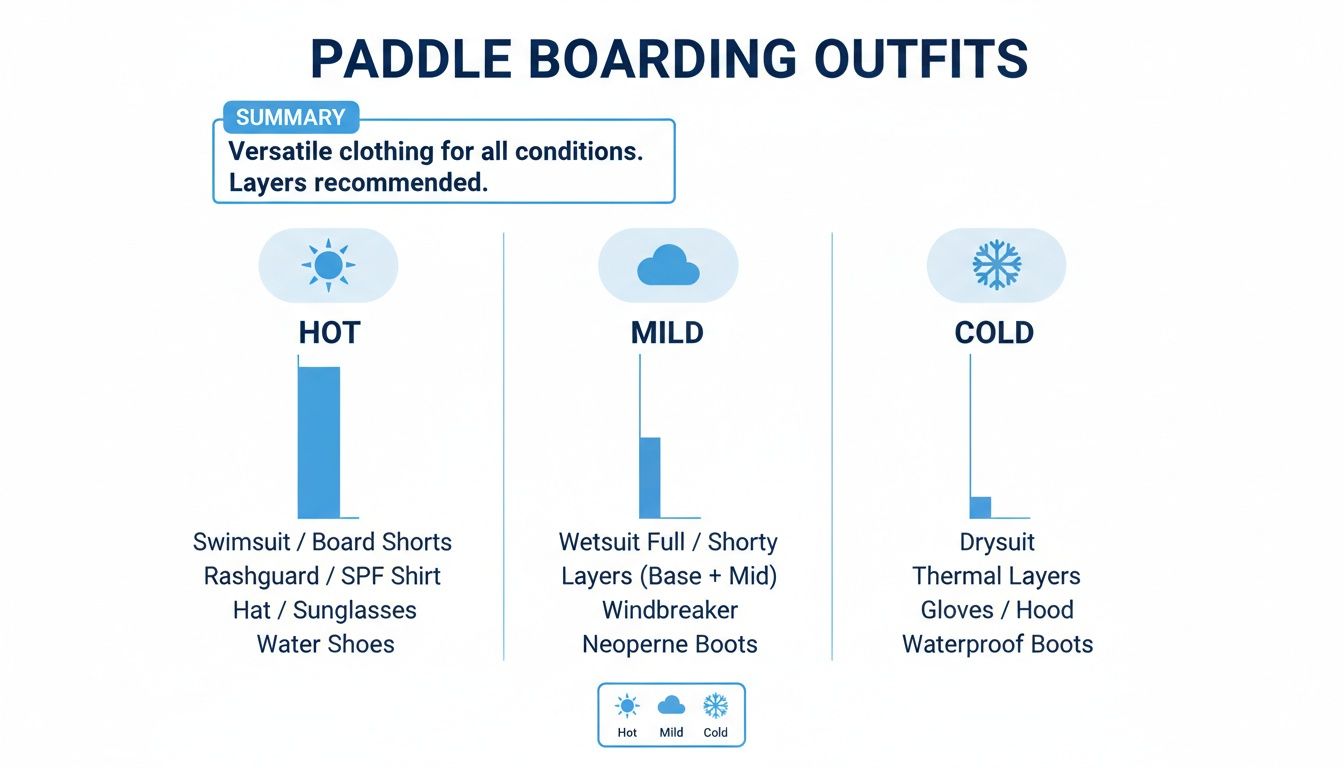
To make it simple, here's a quick look at how to dress for hot, mild, and cold days on the water.

As you can see, your gear shifts from minimal layers in the summer heat to specialized thermal wear like wetsuits when the temperatures really drop.
It’s no secret that paddle boarding is exploding in popularity. The stand-up paddleboard market is expected to grow from USD 1.9 billion in 2025 to over USD 3.77 billion by 2032. With so many new paddlers hitting the water, the need for versatile, high-performance clothing that can keep up is more important than ever.
On those perfect warm days, a solid pair of boardshorts is your best friend. Combine them with a UV-protective performance shirt, and you've got a setup that works great and looks sharp. If you need a reliable base for your next sunny day on the board, check out our collection of recycled swim trunks built for the water.
Dressing For Sun Protection In Warm Weather
Paddling under a bright, warm sun is one of the best parts of the sport, but it also demands serious respect. The sun’s rays get supercharged on the water, reflecting off the surface and turning a perfect day into a painful sunburn waiting to happen. If you’re unprepared, it’ll get you fast.
Dressing smart is your first and best line of defense against UV radiation.
Think of your clothing as wearable sunscreen. The best paddle boarding outfits for hot weather are built around fabrics with a high Ultraviolet Protection Factor (UPF). A UPF 50+ rating means the fabric blocks over 98% of the sun's harmful rays, offering far more reliable coverage than sunscreen that can sweat or wash off.

Fabric Choices That Beat The Heat
The right material makes all the difference in staying cool and protected out there. It’s not complicated, but it's critical. Here’s a quick guide to what works and what doesn't.
- Synthetics (Polyester/Nylon): These are your top choices, period. They're lightweight, they breathe, and most importantly, they’re quick-drying. They pull moisture away from your skin, keeping you comfortable even after you take a dip.
- Cotton (Avoid at all costs): Cotton is the enemy on the water. When it gets wet, it soaks up water like a sponge, gets heavy, and takes forever to dry. It’ll make you feel cold and clammy even on a hot day, and it offers almost zero UV protection once it’s soaked.
Building Your Sun-Safe Outfit
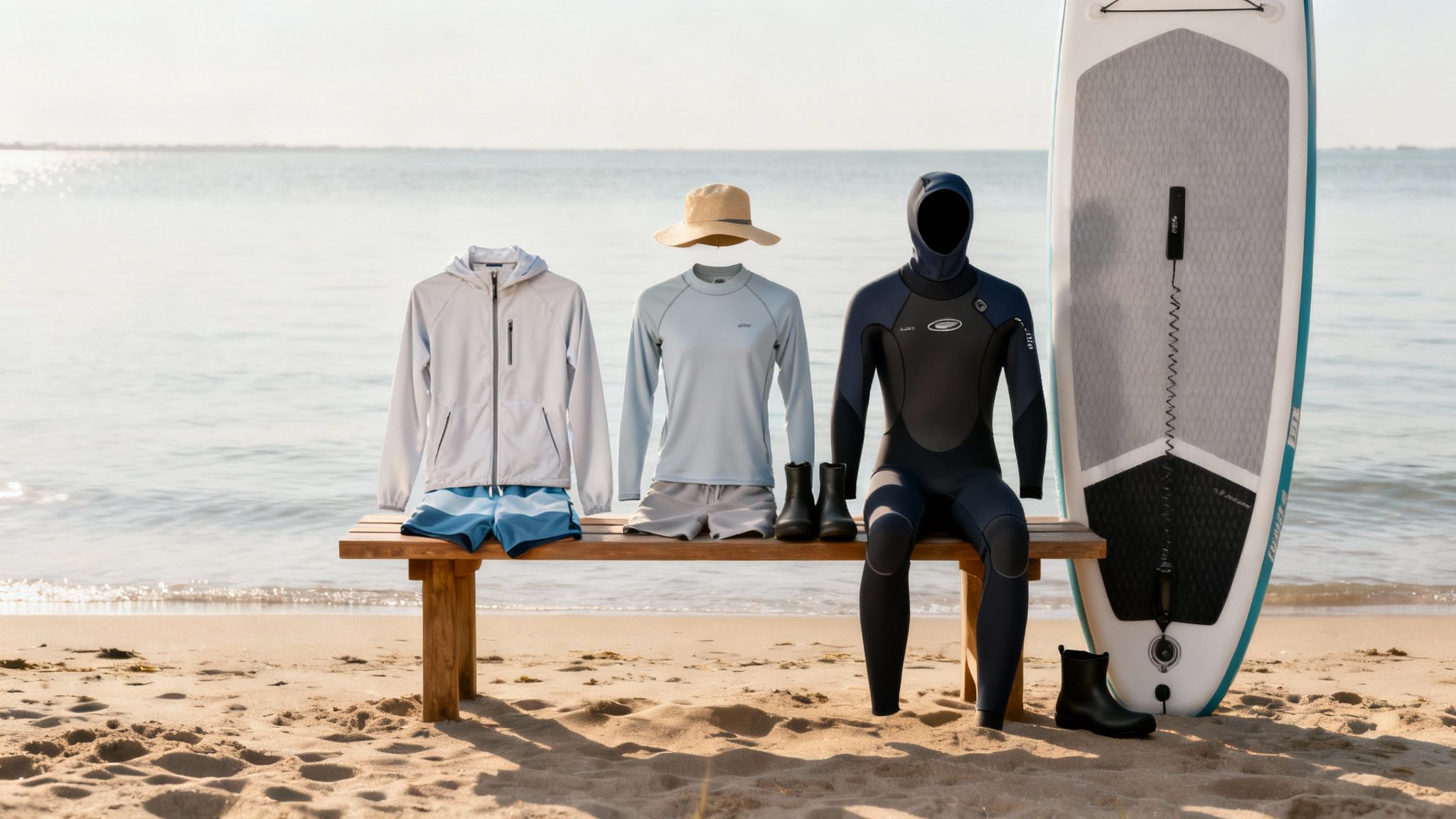
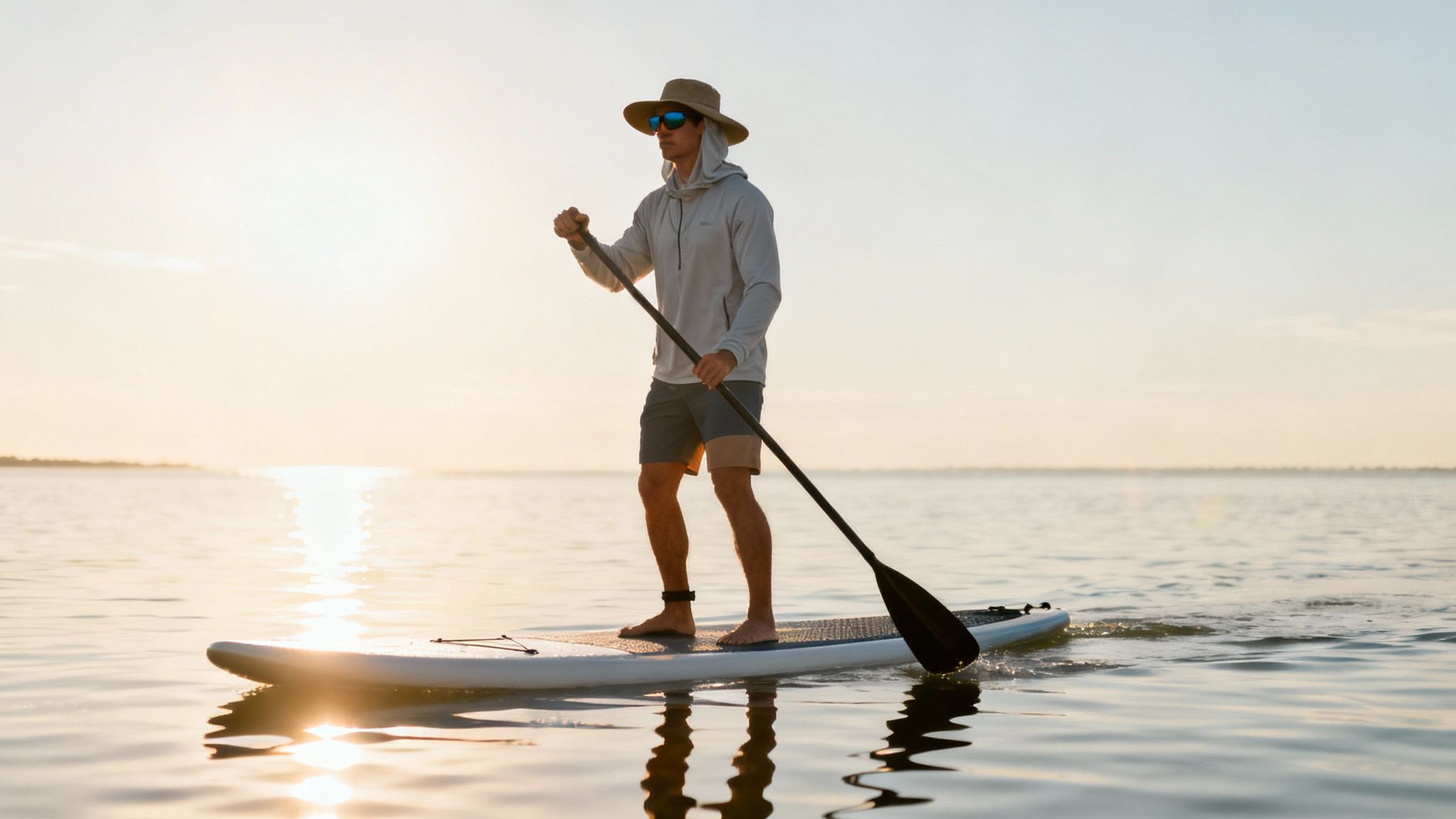
Your goal is simple: maximize coverage without overheating. A perfect setup is a lightweight, long-sleeved performance hoodie paired with comfortable boardshorts or quick-dry leggings. This combo protects your arms, chest, and back while giving you total freedom to move.
Don’t underestimate the sun’s intensity on the water. UV exposure can increase by 50-80% due to reflection off the surface. Yet, a surprising 62% of paddlers often skip wearing protective rash guards or long-sleeve tops, putting themselves at risk of a burn in less than 30 minutes.
This really drives home how important it is to choose gear designed for the job. For a perfect example of what we mean, check out our collection of lightweight UPF performance hoodies built for long days on the water.
Sun protection is absolutely non-negotiable for anyone asking what to wear paddle boarding, especially since the recreational side of the sport accounts for 70% of all SUP use. With the market projected to grow, smart and protective apparel is becoming the standard for good reason.
Layering Strategies For Spring And Fall Paddling
Cooler temperatures don’t mean your paddling season has to end. In fact, spring and fall offer some of the most beautiful, peaceful days you can find on the water, but the unpredictable weather demands a smarter approach to what you wear. The key to staying comfortable is mastering the art of layering—it’s your own personal climate control system out there.
Think of it less like putting on clothes and more like building a small, adaptable shelter right on your body. You're creating a system that can handle a cool morning breeze, warm midday sun, and an unexpected splash all in the same trip. This strategy is all about flexibility.

The Three-Layer System Explained
The foundation of shoulder-season comfort is the classic three-layer system. It’s a proven approach where each layer has a specific job. When they work together, they keep you warm, dry, and comfortable no matter what the day throws at you.
-
Base Layer (The Foundation): This is the layer directly against your skin, and its main job is to manage moisture. You want a snug-fitting, moisture-wicking synthetic fabric like polyester or a merino wool blend. It pulls sweat away from your body so you don't get that cold, clammy feeling after you start paddling hard.
-
Mid-Layer (The Furnace): This is your insulation. Its only purpose is to trap your body heat to keep you warm. A lightweight fleece or a thin puffy vest is perfect here. It provides crucial warmth without adding a ton of bulk, so you can still paddle freely.
-
Outer Layer (The Shield): This is your defense against the elements. A lightweight, water-resistant, and windproof jacket or shell is ideal for this. It’s designed to block wind and spray, which keeps your insulating mid-layer dry and doing its job.
The goal of layering isn’t just to pile on clothes; it’s to create an adaptable system. You can easily shed the mid and outer layers as conditions change, giving you total control over your comfort throughout your paddle.
When To Choose Neoprene
While the three-layer system is excellent for handling air temperature and a little moisture, neoprene is your go-to when there's a real chance of falling into chilly water. It works completely differently than standard layers. Neoprene traps a very thin film of water against your skin, and your body heat warms it up fast, creating a surprisingly effective insulating barrier.
You don’t always need a full-blown wetsuit. For mild-to-cool conditions, consider these options:
- Neoprene Leggings or Shorts: These keep your core warm while leaving your upper body free for less restrictive layers.
- Neoprene Tops or Vests: Great for keeping your torso warm, which is critical for maintaining your overall body temperature if you take a dip.
- Thin "Spring" Wetsuit (1-2mm): This gives you full-body protection without the bulk of a thick winter wetsuit, making it perfect for active paddling in cool water.
Dressing for transitional seasons requires a similar mindset to other water-based activities where conditions can shift on a dime. If you're interested in how these principles apply elsewhere, you can learn more by reading our guide on what to wear deep sea fishing. This approach ensures you’re prepared and comfortable, so you can confidently extend your time on the water.
Staying Warm And Safe In Cold Water Conditions
When the air gets crisp and the water turns icy, paddle boarding takes on a new level of challenge. It also delivers a quiet beauty you just don't get in the summer crowds. But paddling in the cold demands a serious, deliberate approach to your gear. One small mistake in your clothing choice can have major consequences, making this the most critical outfit you’ll ever plan.
The most important rule for cold-weather paddling is simple but non-negotiable: dress for the water temperature, not the air temperature. It might be a beautiful, sunny 55°F (13°C) day, but if that water is 40°F (4°C), you have to be ready for an accidental swim in dangerously cold water. An unexpected fall is always possible, and your gear is your primary defense against cold water shock.
Wetsuit vs Drysuit: The Core Decision
Your main line of defense will be either a wetsuit or a drysuit, and knowing how they work is key. They keep you warm in completely different ways, and the right choice comes down to conditions, personal preference, and budget.
Think of it like this:
- A wetsuit is like a high-tech second skin. It traps a thin layer of water against your body, which you then heat up, creating an insulating barrier. You get wet, but you stay warm.
- A drysuit is more like a waterproof shell. It uses gaskets at the neck, wrists, and ankles to completely seal out all water. You stay perfectly dry, relying on the insulating layers you wear underneath for warmth.
A drysuit offers the ultimate protection by keeping you completely dry, which is critical for preventing hypothermia in extreme cold. A wetsuit is a more common and affordable option that provides essential thermal protection but makes your body work harder to stay warm once you’re wet.
Choosing Your Neoprene Armor
If you go with a wetsuit, its thickness—measured in millimeters (mm)—is everything. Thicker neoprene means more insulation. For cold-water paddling, a suit that's at least 4/3mm thick is a solid starting point. This means the neoprene is 4mm thick on your core and 3mm on your arms and legs, giving you a good balance of warmth and mobility.
Your hands, feet, and head are often the first to feel the bite of the cold. Don't overlook these essential neoprene accessories:
- Booties: A good pair of 5mm (or thicker) neoprene booties are non-negotiable. They keep your feet warm and functional, because cold feet can throw off your balance in a hurry.
- Gloves: Look for 3-5mm neoprene gloves or mitts. They protect your hands from the cold, which can make it surprisingly difficult to keep a solid grip on your paddle.
- Hood: You lose a massive amount of body heat through your head. A simple neoprene hood can make a huge difference in your overall warmth and comfort on the water.
Ultimately, knowing what to wear for cold water paddle boarding is about respecting the conditions. By dressing for immersion and investing in the right thermal gear—like a proper wetsuit or drysuit—you can safely extend your season and enjoy the water year-round.
Must-Have Accessories Beyond The Board And Paddle
Getting your paddle boarding setup dialed in goes way beyond the board and paddle. The right accessories are what truly separate a good day on the water from a great one, turning unexpected challenges into minor inconveniences.
Think of these items as your on-water insurance policy. They're not just extras—they’re core components of a smart, safe setup that lets you focus on the experience instead of worrying about what could go wrong.
Safety Gear Is Non-Negotiable
First things first: let's talk about the gear that keeps you safe. In many places, this stuff isn’t just recommended; it’s required by law. Never leave the shore without it.
-
Personal Flotation Device (PFD): This is the single most important accessory you can own. A PFD could be a traditional life vest or a more streamlined inflatable belt pack. While vests give you instant buoyancy, the inflatable belts are way less restrictive, making them a go-to for experienced paddlers who value freedom of movement.
-
Board Leash: Your leash is your lifeline to the board. It’s like a seatbelt that keeps you connected if you fall in. A sudden gust of wind or a strong current can push your board—your biggest flotation device—out of reach in seconds. Always, always wear your leash.
Footwear For Grip And Protection
What you wear on your feet has a huge impact on your stability and comfort. Going barefoot gives you the best feel for the board, but it’s not always the smartest or safest play.
Here’s how to choose based on the conditions:
- Barefoot: Perfect for warm days over sandy bottoms where you want maximum board feel and grip.
- Water Shoes: A lifesaver when you’re dealing with sharp rocks, shells, or sketchy shorelines. They give you great protection and solid grip for exploring.
- Neoprene Booties: An absolute must for cold-water paddling. They keep your feet from going numb, which can seriously mess with your balance and control.
A complete setup is especially important with the rise of inflatable SUPs. These boards, now representing 60% of sales, are lighter and more susceptible to wind. Surveys show that 25% of beginner wipeouts are caused by loose gear, making accessories like a leash essential for staying connected to your board.
This data really drives home why a full kit matters from day one. In fact, retailers have found that offering bundles that include key accessories boosts gear purchases among first-timers by 40%. You can learn more about the trends in the inflatable SUP market and see how these accessories play a critical role.
Convenient Extras For A Better Paddle
Finally, a few small items can make a huge difference in how much you enjoy your time out there.
- Dry Bag: A small, waterproof dry bag is clutch for keeping your phone, keys, and snacks from getting soaked.
- Polarized Sunglasses: These are a total game-changer. They cut the harsh glare reflecting off the water, which reduces eye strain and helps you spot underwater hazards before you’re on top of them.
- A Good Hat: Whether it’s a wide-brimmed hat or a simple cap, you need something to protect your face and scalp from direct sun. It makes a bigger difference than you think.
Your Ultimate Paddle Boarding Packing Checklist

Let’s be honest, the difference between a great day on the water and a frustrating one often comes down to what you packed. A solid checklist takes the guesswork out of the equation so you can spend less time stressing and more time paddling.
We've broken it all down by season and situation. Bookmark this guide and give it a quick scan before you head out—it’s the easiest way to make sure you never leave a critical piece of gear behind.
The Complete SUP Trip Packing Checklist
This scannable list pulls everything together, so you’re covered from scorching summer days to crisp winter mornings. Print it, screenshot it, or just pull it up on your phone—whatever it takes to make sure you’re ready.
| Category | Hot Weather Essentials | Cold Weather Essentials | Don't Forget! |
|---|---|---|---|
| Clothing | Swimsuit, Boardshorts, UPF 50+ Hoodie, Rash Guard | Drysuit or 4/3mm+ Wetsuit, Insulating Layers | PFD (Life Vest) |
| Footwear | Barefoot or Water Shoes | Neoprene Booties (5mm+) | Ankle Leash |
| Headwear | Wide-Brimmed Hat, Cap | Neoprene Hood, Beanie | Sunglasses (Polarized) |
| Handwear | (None) | Neoprene Gloves or Mitts | Water-Resistant Sunscreen |
| Safety | Whistle, Phone in Dry Case | Dry Bag with Extra Layers | ID and Keys |
| Extras | Water Bottle, Waterproof Speaker | Change of Warm Clothes for After | Snacks, First-Aid Kit |
Getting your gear dialed in is a habit. The more you do it, the more it becomes second nature, freeing you up to focus on the water ahead.
Hot Weather Essentials
When the sun is high and the water is calling your name, the goal is simple: stay cool, protected, and hydrated. Think lightweight and quick-drying.
- Clothing: A swimsuit or pair of boardshorts is your base, but a UPF 50+ performance hoodie or rash guard is non-negotiable for sun protection.
- Sun Protection: You’ll want polarized sunglasses, a wide-brimmed hat or a good cap, and plenty of water-resistant sunscreen.
- Footwear: Go barefoot or wear simple water shoes.
Mild and Cool Weather Gear
Spring and fall are all about layering. Conditions can shift in a heartbeat, so you need to be able to adapt by adding or shedding a layer on the fly.
- Clothing: Start with a synthetic base layer, add a fleece mid-layer, and top it off with a windproof or water-resistant shell. Neoprene leggings or a long-sleeved top can also be a great call.
- Footwear: Water shoes or thin neoprene booties will keep your feet from going numb.
- Headwear: A beanie or cap helps you regulate your temperature.
Remember the golden rule for shoulder seasons and winter: always dress for the water temperature, not the air temperature. This simple mindset shift is the most important factor in staying safe when paddling in cooler conditions.
Cold Weather Must-Haves
When that water gets genuinely cold, safety becomes the absolute priority. This gear isn’t optional—it’s what stands between you and the serious risks of cold water shock and hypothermia.
- Primary Gear: A full wetsuit (4/3mm or thicker) is the minimum. A full drysuit with insulating underlayers is even better.
- Extremities: Your hands, feet, and head lose heat the fastest. Protect them with thick neoprene booties (5mm+), neoprene gloves or mitts, and a neoprene hood.
Common Questions About Paddle Boarding Attire
Even the best-laid plans can leave you with questions standing in front of your closet. What if it gets windy? Am I overthinking this? Getting these common questions sorted out is the fastest way to build confidence and make sure you have a great day on the water.
Let's clear up a few things we hear all the time.
Can I Wear Cotton For Paddle Boarding?
This is a hard no. Think of a cotton t-shirt as a sponge—the second it gets wet, it soaks up water, gets heavy, and loses all ability to keep you warm. On a hot day, it’s just plain uncomfortable. In cooler weather, it can become dangerously cold against your skin.
Stick with synthetics like polyester or nylon. These fabrics are built to pull moisture away from your skin and dry out fast, keeping you light, comfortable, and, most importantly, safe.
Do I Really Need A Wetsuit For Spring Paddling?
This one is simple: dress for the water temperature, not the air temperature. If the water is below 65°F (18°C), a wetsuit is a smart call. It might feel warm standing on the shore, but a sudden fall into cold water can trigger cold water shock, which is a serious, immediate risk.
The golden rule for safety is to always dress for the water temperature. This mindset shift ensures you’re prepared for an unexpected swim, which is the most critical part of staying safe during those transitional spring and fall months.
What Is The Best Footwear For Paddle Boarding?
This really comes down to personal preference and the conditions you’re paddling in. In the heat of summer, a lot of people love going barefoot. It gives you a great feel for the board and a solid connection to the water.
But if you’re launching from a rocky shore or exploring areas with sharp shells, a good pair of water shoes is invaluable. They offer great grip and save your feet from cuts. When the water gets cold, neoprene booties are non-negotiable—they’re essential for keeping your feet warm enough to maintain your balance.
Should I Wear A Hat And Sunglasses?
Absolutely, and don't even think about skipping them. A wide-brimmed hat or a simple cap protects your face, neck, and scalp from getting fried. The sun’s reflection off the water is intense.
Polarized sunglasses are just as crucial. They don’t just make you more comfortable; they cut the blinding glare bouncing off the surface. This seriously reduces eye strain and helps you spot underwater hazards like rocks or logs, making your entire paddle safer and more enjoyable.
At Lake Pacific, we design gear that works as hard as you do on the water. Our performance apparel is built to keep you comfortable, protected, and ready for anything. Explore our full collection at https://www.lakepacificgear.com.