The Best Clothing for Fishing A Guide to Performance Angler Gear
Share
The right clothing for fishing isn't just about what you wear—it's a purpose-built system designed to keep you comfortable, safe, and focused on the water. Think of it as a modular kit built on three pillars: a moisture-wicking foundation, smart layering for temperature control, and a tough outer shell for sun and rain. In the end, the right apparel is just as critical as your rod and reel.
Your Essential On-The-Water Apparel System
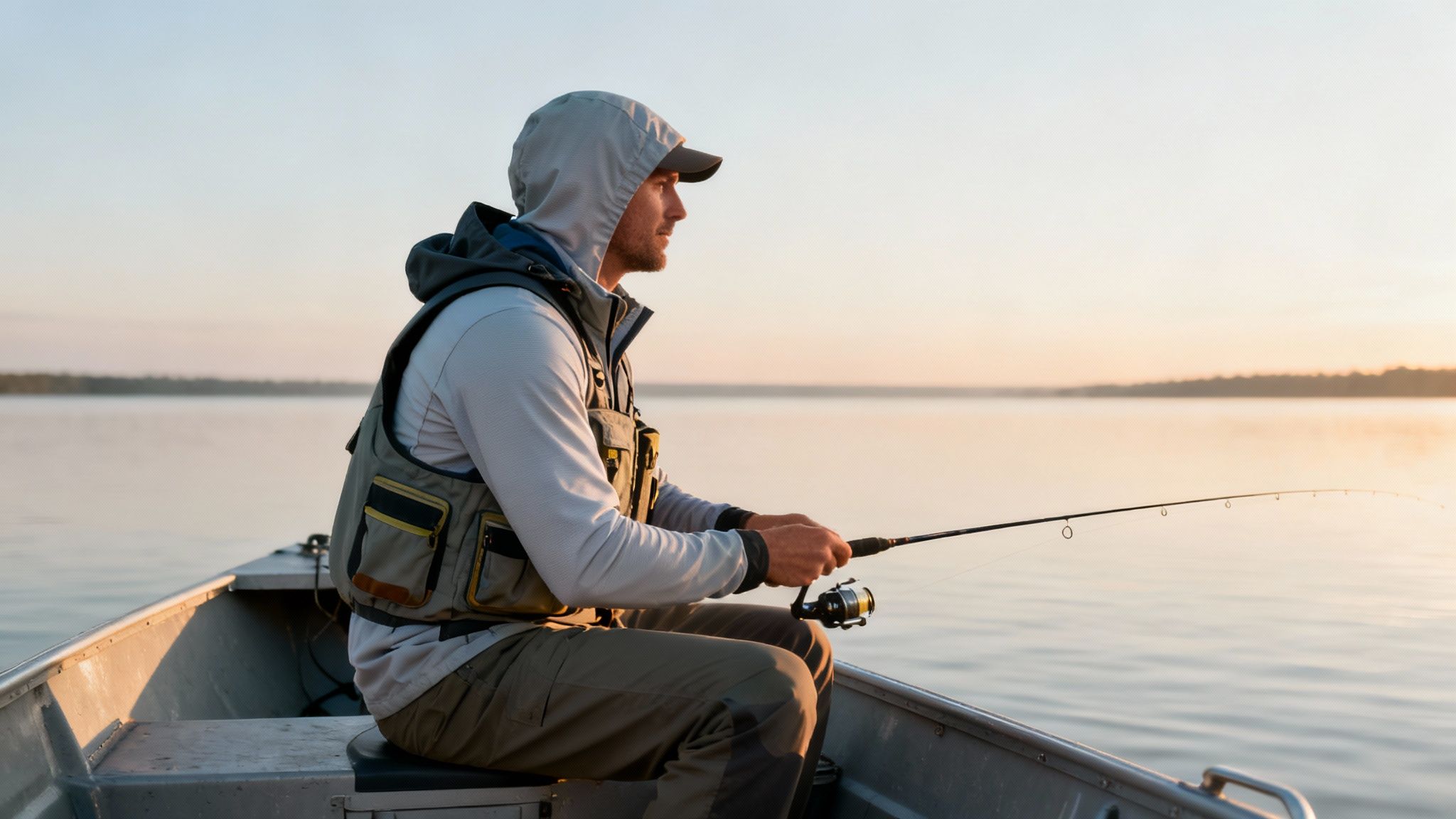
Stop thinking about your fishing apparel as separate garments. Start seeing it as a complete performance system. Just like a professional athlete wears a uniform designed for their sport, an angler’s clothing is a collection of specialized tools. Each piece works with the others to create a personal microclimate, shielding you from the elements so you can perform at your best, from the first cast at dawn to the last retrieve at dusk.
This isn’t about having a huge wardrobe. It’s about owning the right pieces that can adapt to anything the day throws at you. Whether you’re facing a blazing sun on a calm lake, a surprise downpour offshore, or a chilly morning breeze, a well-chosen apparel system keeps you comfortable and focused. The real goal is to forget you’re even wearing it.
The Three Pillars of Fishing Apparel
At its core, all great fishing apparel is built on a simple, effective framework. Once you understand these three components, you can build a versatile kit for any adventure.
- Foundation of Comfort: It all starts with what’s next to your skin. A high-performance, moisture-wicking base layer is non-negotiable. It pulls sweat away from your body, preventing that clammy, chilled feeling you get from old-school cotton.
- Adaptable Layering: Smart layering is how you regulate your body temperature as conditions shift. An insulating mid-layer adds warmth when you need it and can be stripped off in seconds as the day heats up.
- Protective Outer Shell: Your final layer is your shield. This includes everything from a UPF 50+ hoodie that blocks harmful UV rays to a fully waterproof jacket that keeps you bone-dry in a storm.
Your clothing is your first line of defense against the elements. A well-designed system doesn't just keep you comfortable—it extends your time on the water, improves your focus, and enhances your overall safety.
By mastering this system, you move beyond just getting dressed and start gearing up with intent. Each piece has a job to do. Before we dive into specific fabrics and tech, let's nail down the essentials.
Here’s a quick checklist that forms the backbone of any serious angler’s closet. Think of this as the core of your on-the-water apparel system.
Core Fishing Apparel Checklist
| Apparel Category | Primary Function | Key Features to Look For |
|---|---|---|
| Base Layer | Moisture Management | Wicking fabric (polyester/merino), quick-drying, breathable |
| Mid-Layer | Insulation | Fleece or light synthetic fill, warmth-to-weight ratio, packable |
| Outer Shell | Weather Protection | Waterproof/windproof, breathable membrane, UPF 50+ rating |
| Pants/Shorts | Mobility & Protection | Water-resistant, quick-drying fabric, articulated knees, UPF rated |
| Footwear | Traction & Support | Non-marking soles, water drainage, quick-drying materials |
| Headwear & Gloves | Sun/Element Shield | Wide brim, neck cape, UPF fabric, finger dexterity (gloves) |
This table covers the fundamentals. With these pieces in your arsenal, you're prepared to build a system that can handle almost any condition you'll face on the water.
The Engine of Performance: Why Fabric Matters
When it comes to fishing apparel, the fabric is everything. It’s the engine that drives comfort, protection, and performance on the water. Too many people think of a fishing shirt as just another piece of clothing, but that’s like comparing a high-performance outboard to a paddle. One is engineered for a specific job; the other is just… there. The difference between a purpose-built synthetic and a standard cotton tee can absolutely make or break your day offshore.
Cotton is a sponge. It soaks up sweat and spray, gets heavy, and holds that cold moisture against your skin. Modern performance apparel does the exact opposite. It’s built from advanced synthetic fabrics like polyester and nylon, which are hydrophobic—a fancy way of saying they hate water. Instead of absorbing moisture, these fibers are designed to push it away from your skin and out to the surface of the garment to evaporate. That simple process is the secret to staying dry, comfortable, and focused, even when the sun is beating down.
Synthetics Rule the Water
The real magic happens when designers start blending materials. By weaving different fibers together, they create gear that’s far more than the sum of its parts, tailored for the specific demands of a day on the water.
- Move Without Restriction: By adding spandex or elastane into the mix, a shirt gains built-in stretch. This is critical for everything from casting all day to leaning over the rail to gaff a fish. Your clothing should never hold you back.
- Built-in Sun Block: Many performance fabrics have a specific Ultraviolet Protection Factor (UPF) rating, achieved through a tight weave or a specialized treatment. Think of it as sunscreen you can't sweat off, protecting your skin from the sun's relentless radiation.
- Lightweight, Not Flimsy: Modern synthetics are incredibly tough and abrasion-resistant without feeling bulky or heavy. This means your gear can handle getting scraped against a dock, a boat gunwale, or coastal brush and still feel light and breathable.
A high-performance fabric isn’t just material—it’s a purpose-built system designed to manage moisture, regulate your temperature, and shield you from the elements. It’s the foundational technology that makes modern fishing gear work.
This isn't just a niche obsession; it's what serious anglers now expect. In fact, performance shirts dominate the North American fishing clothing market, holding a 45.50% share. Anglers are choosing lightweight, breathable, and quick-drying gear with integrated technologies like UPF protection and moisture-wicking capabilities. You can see how this trend is shaping the entire industry by checking out the full fishing apparel market trends report.
What “Moisture-Wicking” Actually Means
You hear the term "moisture-wicking" thrown around a lot, but what is it? It’s a fabric’s ability to pull sweat away from your skin using something called capillary action. The best analogy is how a paper towel sucks up a spill—wicking fabrics do the exact same thing with moisture, drawing it from your skin to the outer layer of the shirt.
This is vital for two reasons. First, it lets your body's natural cooling system—sweat—do its job efficiently by allowing for rapid evaporation. Second, it prevents that dangerous, bone-deep chill that sets in when a wet shirt sits against your skin in cooler, windy conditions. If you want to get into the nitty-gritty, you can learn more about how moisture-wicking fabric keeps you comfortable in our detailed guide.
Once you understand the science behind these materials, you can see past the marketing hype and choose your gear based on what actually works. Whether it's a polyester-spandex blend for mobility or a UPF-treated nylon for sun protection, picking the right fabric is your first and most important step to staying on the water longer.
Mastering Any Weather With Smart Layering
Smart layering is the secret weapon for all-day comfort on the water. Think of it less as just putting on clothes and more like building a shelter you can wear. It’s your personal climate control system, allowing you to adapt instantly to changing conditions—from a cool, misty dawn to a blazing afternoon sun.
Instead of relying on one bulky jacket, this approach uses three specialized, lighter layers that work together. This simple system stops the miserable cycle of sweating while you’re active, then shivering the moment you stop. Mastering it is the key to staying focused on the fish, not on your body temperature.
Your Personal Climate Control System
Each of the three layers has a distinct, critical job to do. Once you understand their roles, you can build the perfect defense against any weather forecast and make sure your gear is working for you, not against you.
- The Base Layer (Your Thermostat): This is the foundation, worn right against your skin. Its primary job is moisture management—pulling sweat away from your body to keep you dry.
- The Mid-Layer (Your Furnace): Worn over the base layer, this piece is all about insulation. Its job is to trap your body heat, keeping you warm when the temperature drops.
- The Outer Shell (Your Weather Shield): This is your outermost barrier. Its function is pure protection from wind, rain, and spray, keeping the elements out so your inner layers stay dry and effective.
The real power of a layering system isn't just warmth—it's adaptability. By adding or removing a single layer, you can fine-tune your comfort level in seconds without ever feeling bulky or restricted.
This infographic breaks down the core idea behind the high-performance fabrics that make this system possible.

As you can see, it all starts with the right base fabrics, which provide the technical properties needed to deliver real-world benefits like sun protection and comfort when you need them most.
How to Build Your Layering System
Choosing the right materials for each layer is just as important as the layering concept itself. Each fabric has its strengths and weaknesses depending on the conditions. This table breaks down the common choices.
| Layer | Material Option | Best For | Considerations |
|---|---|---|---|
| Base Layer | Synthetics (Polyester/Nylon) | Wicking sweat in hot or high-exertion conditions. Dries extremely fast. | Can retain odors over time. |
| Merino Wool | Wicking moisture while providing insulation, even when damp. Naturally odor-resistant. | Slower to dry than synthetics; can be less durable. | |
| Mid-Layer | Fleece | Breathable warmth that dries quickly. Great all-around insulator. | Offers minimal wind resistance on its own. |
| Down Insulation | Unbeatable warmth for its weight in dry, cold conditions. Highly packable. | Loses insulating ability completely when wet. | |
| Synthetic Insulation | Insulates even when damp. More durable and affordable than down. | Bulkier and heavier than down for the same warmth. | |
| Outer Shell | Waterproof/Breathable | Heavy rain, boat spray, and windy conditions. Keeps you dry from the outside and inside. | Can be less breathable during high exertion; often pricier. |
| Water-Resistant/Windproof | Light rain, mist, and blocking wind chill. Highly breathable and flexible. | Will eventually soak through in sustained rain. |
Think of these materials as your toolkit. The right combination depends entirely on the forecast and what you plan to do, giving you complete control over your comfort.
For a deeper dive into choosing the right gear for specific conditions offshore, our guide on what to wear for deep sea fishing has you covered.
By using these three distinct components, you create a dynamic system that is far more effective than a single, heavy coat. You can add or subtract warmth and protection as needed, ensuring you're always perfectly dressed for the moment. That’s the difference between just enduring a day on the water and truly enjoying it.
Your Shield Against Sun, Wind, and Rain
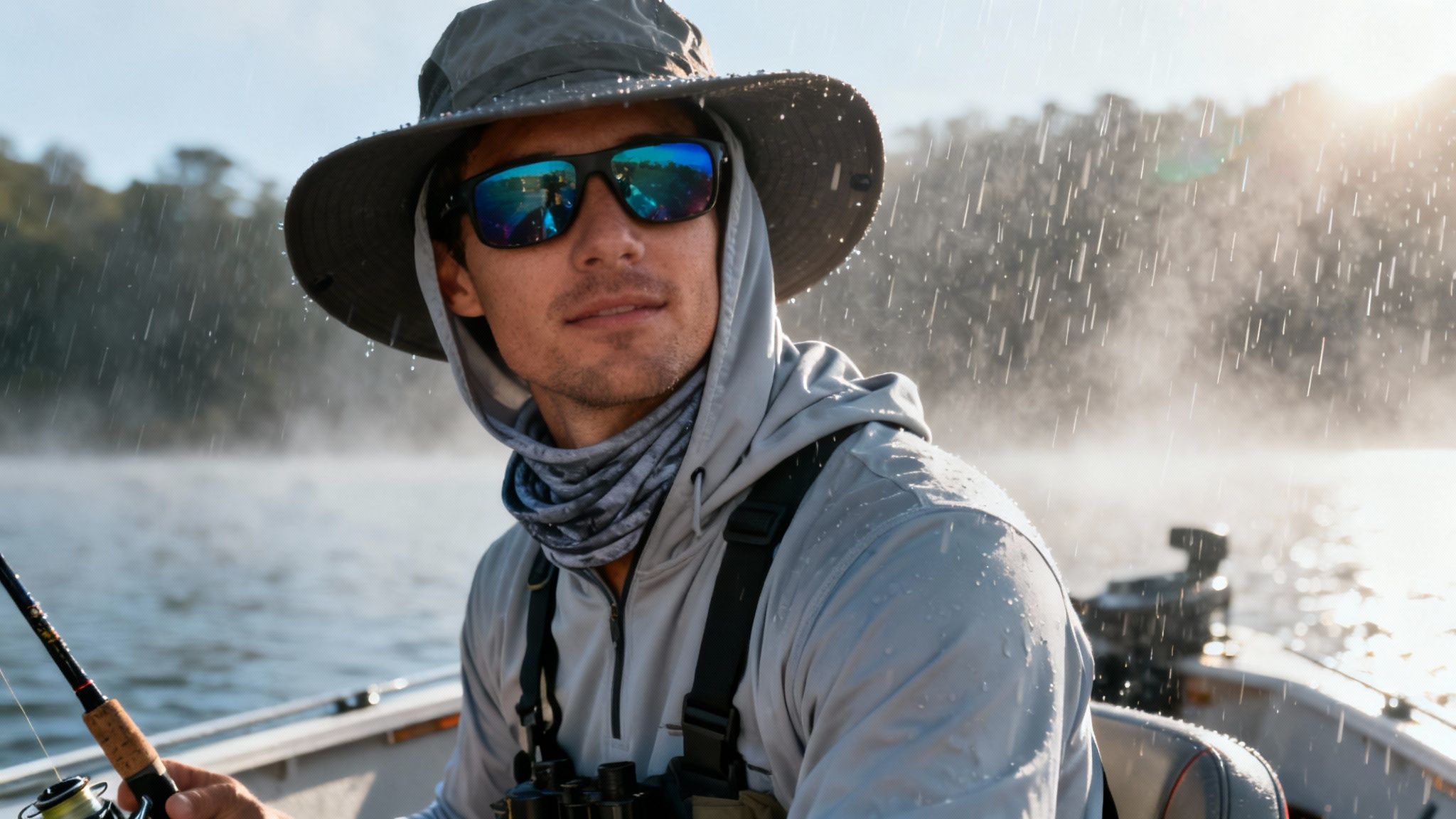
Once your layering system is dialed in, the final piece of the puzzle is your shield—the gear that directly protects you from the harsh realities of a full day on the water. Sun, wind, and rain aren't just minor annoyances. They are powerful elements that can cut a trip short if you’re unprepared.
The best fishing apparel acts as a reliable barrier, letting you focus on the bite, not the burn or the storm.
More than any other element, the sun is a constant factor out there. Sunlight reflects off the surface, meaning you get bombarded by UV rays from above and below. This is where specialized apparel becomes a non-negotiable tool for your health and safety.
Understanding Your Built-In Sunscreen
Think of a garment’s UPF (Ultraviolet Protection Factor) rating as built-in, all-day sunscreen. A standard cotton shirt might have a UPF of only about 5, which plummets when it gets wet. In contrast, performance fishing hoodies and shirts are engineered for serious, reliable protection.
A UPF 50+ rating means the fabric blocks over 98% of harmful UVA and UVB rays from ever reaching your skin. It’s the highest level of sun protection available in clothing and an essential feature for any serious angler.
This consistent shield is why a long-sleeve performance hoodie is one of the most valuable pieces of fishing gear you can own. It covers your arms, neck, and head without causing you to overheat, offering far more effective protection than sunscreen alone, which wears off or gets applied unevenly.
Decoding Rain Gear: Waterproof vs. Water-Resistant
When clouds roll in, not all rain jackets are created equal. Knowing the difference between "water-resistant" and "waterproof" is critical for staying dry and safe when the weather turns.
The distinction is simple, but it has major implications for your comfort on the water.
- Water-Resistant: This gear can handle light spray, mist, or a brief, passing shower. It's often more breathable, making it a great choice for days with a low chance of precipitation. It will eventually soak through in a steady downpour, though.
- Waterproof: A truly waterproof jacket is your fortress against serious weather. It uses advanced membranes and sealed or welded seams to create an impenetrable barrier, keeping you dry during prolonged rain and heavy boat spray.
For anglers who fish in unpredictable climates or offshore, investing in a high-quality waterproof shell is essential. A water-resistant piece is fine for fair-weather days, but a waterproof jacket is what keeps you fishing through a storm instead of racing for the dock.
Completing Your Protective Shield
Your defense doesn't stop with a shirt and jacket. A few key accessories are required to create a complete shield against the elements, protecting the areas your primary clothing can't.
- Wide-Brimmed Hat: A good hat is crucial. It shields your face, ears, and the back of your neck—areas that are constantly exposed and highly susceptible to sunburn.
- Neck Gaiter: This versatile tube of fabric is an angler's best friend. It can protect your neck and face from sun and windburn. If you're wondering about the best ways to use one, our guide on how to wear a neck gaiter offers plenty of practical tips.
- Polarized Sunglasses: These do more than just cut glare. They protect your eyes from harmful UV rays and, just as importantly, help you see structure and fish beneath the water's surface.
By combining these elements, you build a comprehensive defense system. This gear isn't just about comfort—it's about health, safety, and extending your time doing what you love.
Finding The Right Fit for Unrestricted Movement
The best gear for a day on the water should feel like it isn't even there. It needs to become a part of your system, disappearing into the background so you can focus on the fish, not on your clothes. Performance isn't just about the fabric—it's about how a garment moves with you. Think of it like a pro athlete's uniform; it’s built for dynamic, repetitive action, not for standing still.
When your clothing fits right, it allows for a full, natural range of motion. An overhand cast, a hard hookset, or leaning over the gunwale to land a fish all require your gear to stretch and give without pulling tight or binding up. This is where an athletic fit and smart design become absolutely essential to your on-the-water system.
Designed for the Angler’s Motion
Purpose-built fishing apparel is engineered with the specific movements of angling in mind. The brands that really get it incorporate subtle but critical features that make a massive difference over a long day. These aren't just random add-ons; they're solutions to common restrictions you'll find in generic outdoor clothing.
Look for design elements that promote truly unrestricted movement:
- Articulated Shoulders and Sleeves: This just means there’s extra room and a tailored shape around your joints, which stops a jacket or hoodie from riding up your back when you lift your arms to cast.
- Gusseted Crotch: It’s a diamond-shaped panel sewn into the inseam of pants or shorts that allows for a much bigger range of motion when you’re squatting, climbing, or stepping around the boat.
- Stretch-Fabric Panels: Many pieces of gear will build in panels of four-way stretch fabric in key spots—like across the back or under the arms—to make sure the clothing moves with you, never against you.
When these features work together, they eliminate restriction and ensure your gear never gets in the way of a perfect cast or a tough fight.
Striking the Perfect Balance
Finding the right fit is a balancing act. Gear that's too tight will restrict your movement and can even mess with your circulation, making you feel tired faster. But on the flip side, clothing that’s excessively loose and baggy is a liability. It can snag on a reel handle, a boat cleat, or a stray hook—a frustrating and potentially dangerous problem.
The ideal fit is one that’s close enough to the body to be efficient and avoid snags, yet provides ample room for layering and complete freedom of movement. It’s a fit that’s present, but never noticed.
Keep an eye out for gear described as having an "active" or "athletic" fit. That's code for "designed to accommodate movement," not just hang off your frame. The goal is to create a seamless connection between you and what you're wearing, so every action feels natural and easy. That's the real mark of exceptional fishing apparel.
How Performance Gear Meets Modern Style
The days of bulky, one-dimensional fishing gear are over. Gone. Today, the best apparel for a life on the water blends serious performance with a clean, modern style that works just as well back at the dock as it does 100 miles offshore.
You no longer have to choose between looking good and staying protected. The market has finally caught up, creating a new class of gear that works hard during a long day of casting but doesn't scream "technical apparel" when you’re grabbing a bite after. It’s about versatile, water-ready essentials.
The Rise of the Angler Aesthetic
Smart brands now design apparel with a dual purpose. They build a performance hoodie with UPF 50+ sun protection and moisture-wicking fabric, but they give it an athletic cut and clean graphics. This approach hits home with a new generation of anglers who see fishing not just as a hobby, but as a core part of their identity.
This is about more than just aesthetics. It reflects a deeper connection to the water, where your gear becomes an extension of that passion. The goal is simple: create pieces you actually want to wear, whether you’re fishing or not.
Today’s angler wants gear that reflects their identity on and off the water. The best apparel delivers technical performance without sacrificing everyday style, becoming a trusted staple in any coastal lifestyle wardrobe.
Function Meets Fashion and Sustainability
This shift isn't just a vibe; it's driving the entire market. Lifestyle and fashion trends are reshaping the industry, turning fishing gear from basic tools into functional, stylish pieces that connect with a much broader audience, including younger anglers and women.
A huge piece of this modern approach is the demand for sustainability. As awareness around ocean health grows, so does the preference for eco-friendly materials. Top-tier brands are responding by integrating recycled polyester and organic cotton, showing a shared commitment to protecting the waters we all depend on. To see how these trends are shaping the future of the industry, you can explore more insights about the fishing apparel and equipment market.
This focus on sustainability does more than just reduce our footprint. It deepens the bond between the angler and the ocean.
Key Elements of Modern Fishing Apparel
So, what does this blend of style and performance actually look like? Here are the key features that define today's best fishing clothing:
- Clean Silhouettes: Gear is designed with a more tailored, athletic fit. It cuts the bulk and improves mobility without looking sloppy.
- Versatile Color Palettes: Brands are moving beyond old-school camo and loud graphics, offering modern, understated colors that look right anywhere.
- Subtle Branding: Logos are often cleaner and more refined. The quality and fit of the garment do the talking.
- Cross-Functional Design: Pieces like performance hoodies, quick-dry shorts, and breathable tees are built to be your go-to for any outdoor activity, not just fishing.
Ultimately, this new wave of fishing apparel positions your gear not just as a utility, but as a statement. It’s clothing built for the demands of the water and designed for the rhythm of a life lived outdoors.
Answering Your Questions About Fishing Apparel
If you're new to technical fishing gear, the sheer number of options and technologies can feel a bit overwhelming. We get it. That's why we've pulled together the most common questions anglers ask, with clear, straightforward answers to help you choose the right clothing for your time on the water.
This is all about cutting through the jargon so you can invest in gear that actually works.
Why Can’t I Just Wear a Cotton T-Shirt for Fishing?
This is probably the most common—and most important—question we hear. A cotton t-shirt is one of the worst things you can wear on the water because it acts like a sponge, soaking up every drop of sweat and spray. Once it's wet, it loses all its insulating properties and just clings to your skin, making you cold even on a perfectly warm day.
In cooler weather, that wet cotton can dangerously pull heat away from your body. Performance fabrics are engineered to do the exact opposite. They wick moisture away from your skin and dry out incredibly fast, keeping you comfortable, safe, and focused on the fish, no matter the conditions.
What Does a UPF 50 Rating Really Mean?
Think of it as sunscreen that’s woven right into the fabric of your shirt. UPF stands for Ultraviolet Protection Factor, and a rating of UPF 50+ is the highest standard you can get.
It means the fabric is certified to block over 98% of the sun's harmful UVA and UVB rays from ever reaching your skin. For anyone spending hours under that intense, reflected glare on the water, it’s an absolutely essential layer of defense against long-term skin damage.
Best of all, this protection doesn't wash out or wear off like sunscreen, giving you consistent, reliable coverage all day long.
When Do I Need a Waterproof vs. Water-Resistant Jacket?
Knowing the difference here is the key to staying dry. A water-resistant jacket is built to handle light spray or a brief, passing shower. These jackets are generally more breathable, which makes them perfect for days when you only expect a little bit of weather.
A waterproof jacket, however, is your fortress in a real storm. It’s constructed with advanced membranes and fully sealed seams to create an impenetrable barrier against steady rain or heavy boat spray. If you fish in unpredictable weather or head offshore, a truly waterproof jacket isn't a luxury—it's a critical piece of gear for your comfort and safety.
Are Specialized Fishing Pants Worth The Money?
For any serious angler, the answer is a firm yes. Sure, you can get by with other pants, but specialized fishing pants offer huge advantages that you’ll appreciate after a long day. They’re made from durable, quick-drying fabrics with built-in stretch that moves with you.
But more importantly, they’re designed with features you just won’t find anywhere else.
- Gusseted Crotch & Articulated Knees: These sound technical, but they simply mean you get a full range of motion for casting, kneeling, and moving around a boat without feeling restricted.
- Reinforced Pockets: Many have dedicated plier pockets lined with tough material to prevent your tools from tearing them up.
- Strategic Storage: Zippered cargo pockets are placed just right to keep your phone, keys, or other essentials secure while you're on the move.
These functional details make them far superior to a pair of jeans or standard shorts for an active day on the water.
At Lake Pacific, we design water-ready essentials that blend this kind of on-the-water performance with clean, everyday style. Gear up for your next cast by exploring our collection of performance hoodies, hats, and shorts. Shop the latest collection at Lake Pacific.