

A Guide to Fishing Face Masks for Sun Protection
A high-performance fishing face mask isn't just an accessory you grab on the way out the door. It's a core piece of equipment — designed to keep you on the water longer, prevent a painful end-of-day burn, and help you stay sharp when the bite is on.
Why a Fishing Face Mask Is Non-Negotiable Gear
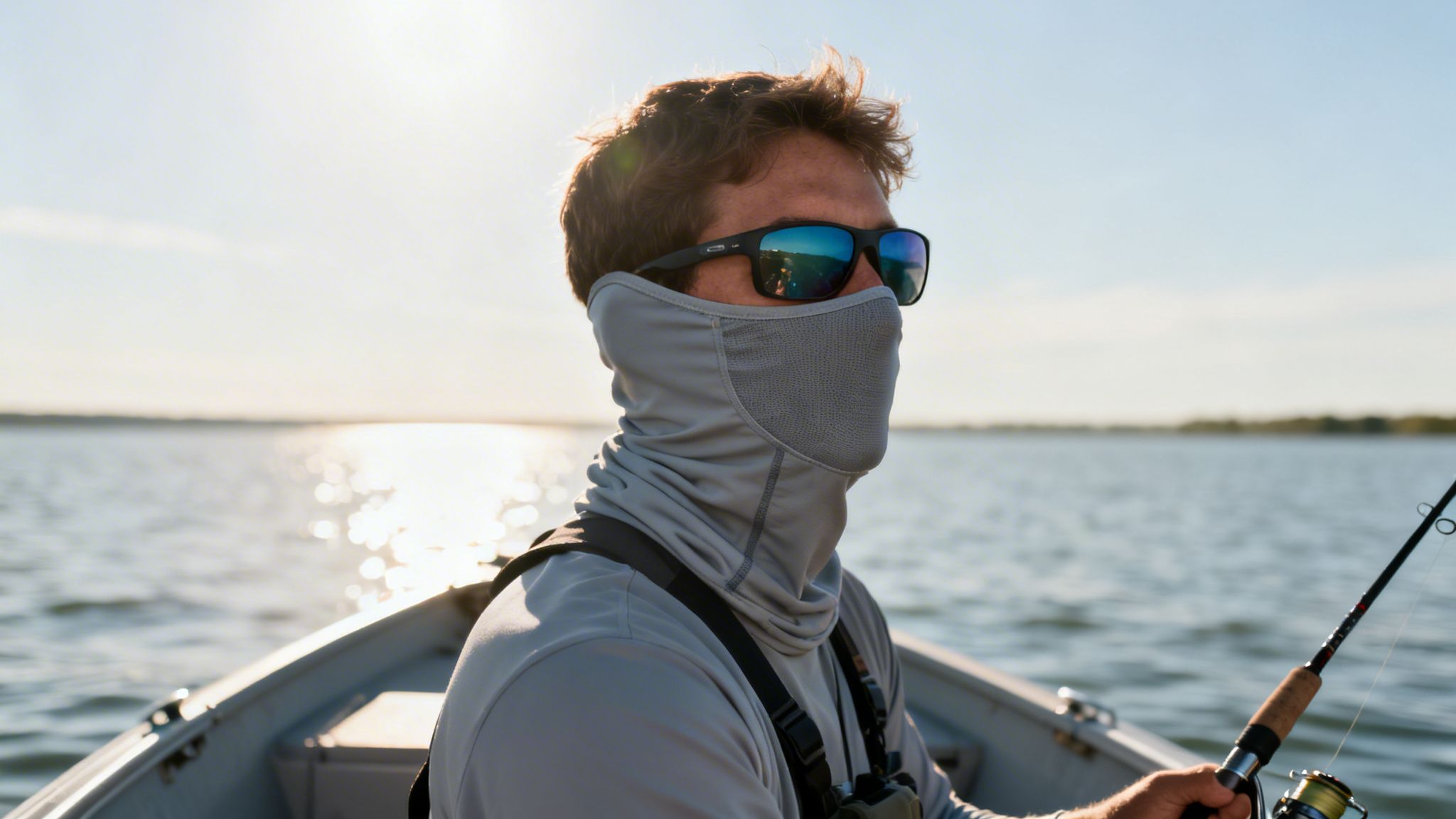
Eight hours under a brutal sun, with UV rays bouncing off the water from every angle. Sunscreen helps, but it sweats off and always misses sensitive spots like your ears and the back of your neck. A fishing mask provides a physical, consistent barrier against that assault.
The real-world benefits:
- Persistent Sun Protection: A reliable UPF rating that doesn't wash off or wear out in the middle of a hot bite. This is the same principle behind our guide on the benefits of UPF fishing shirts.
- Defense Against the Elements: Cuts the sting of windburn on a long run, deflects salt spray, and offers warmth on early morning launches.
- Enhanced Comfort and Focus: By pulling sweat away from your skin, a breathable mask keeps you cooler and more focused on the water.
What Makes a Great Fishing Mask
UPF Rating: The Cornerstone of Protection
A fabric with a UPF 50+ rating physically blocks over 98% of the sun's harmful rays — solid, all-day defense that won't sweat off. When you're surrounded by water that reflects and intensifies sunlight, a reliable physical barrier is non-negotiable for preventing long-term skin damage.
Performance Fabrics: The Engine of Comfort
Most high-quality fishing masks are made from a polyester-spandex blend:
- Polyester: Durable, lightweight, naturally hydrophobic — repels water and dries fast.
- Spandex: Adds crucial stretch so the mask fits your face and neck without feeling tight, moving with you as you cast and scan the water.
Breathability and Moisture Wicking
Breathability lets air pass through the fabric — vital for preventing heat buildup and keeping your breath from fogging your sunglasses. Moisture-wicking actively pulls sweat away from your skin and spreads it across the outer surface to evaporate. We cover this in our complete guide to moisture-wicking fabric.
Matching the Mask to Your Environment
For Inshore and Flats Fishing
Relentless direct sun, no shade, intense glare off shallow water. You need maximum breathability and superior moisture-wicking. Look for a lightweight polyester-spandex blend with laser-cut breathing holes to prevent sunglasses from fogging when you're trying to spot a tailing fish.
For Offshore Fishing
Long runs, biting wind, salt spray, and temperature swings. A slightly thicker mask protects against windburn and spray. A longer neck gaiter style tucks into your shirt collar and stops cold wind from creeping down your back. Still needs to be quick-drying to handle spray on long runs.
Pair Your Mask with a Performance Hoodie
For total, gap-free sun protection, your mask needs to work seamlessly with your hoodie. The combination of a UPF fishing face mask with one of our performance hoodies creates a complete sun defense system:
- Bluefin — offshore pelagic design, hood covers neck and ears
- Wahoo — fast water design in electric blue
- Silhouette White — light color, heat-reflective, clean minimal design
- Octo Grey — bold saltwater statement
- LP Logo Blue — the signature coastal design
Explore the full range: Performance Fishing Hoodies | Lake Pacific
How to Wear Your Mask for Maximum Comfort
The Pro Trick to Eliminate Foggy Sunglasses
Pull your fishing face mask up high on the bridge of your nose so it feels snug. Then rest the nose pads of your sunglasses over the top of the mask's fabric. This forces your warm breath to vent downward and outward, away from your lenses. For more on neck gaiter styles, read our guide on how to wear a neck gaiter.
Integrating Your Mask with Hats and Hoodies
- Start with the Mask: Pull it up just below your eyes, covering your ears completely.
- Add Your Hat: Hat band sits just over the top edge of the mask, locking it in place.
- Layer the Hoodie: Pull the hood up over your hat. This closes remaining gaps and gives you maximum coverage.
How to Care for Your Fishing Mask
- Rinse First: After saltwater, give the mask a quick rinse in fresh water to remove corrosive salt crystals.
- Wash Cold: Gentle, cold-water cycle. Hot water ruins the elasticity of spandex fibers.
- Use Mild Detergent: Free of dyes, perfumes, and softeners.
- Air Dry: Never put in the dryer. Heat permanently destroys the fabric's UPF treatment and stretch.
Common Questions About Fishing Face Masks
Will a Fishing Face Mask Make Me Too Hot?
The opposite. A well-made mask actively pulls sweat off your skin and creates a legitimate cooling effect as that moisture evaporates. Many experienced anglers find they stay cooler with a light-colored, UPF-rated mask on than with skin exposed to the relentless sun.
How Can I Stop My Sunglasses From Fogging Up?
Pull the mask high onto the bridge of your nose. Place your sunglasses so the nose pads rest over the top of the mask's fabric. This forces your breath to vent out, not up. Always: glasses over mask.
Is a Mask Better Than Just Using Sunscreen?
They work best as a team. But a mask provides reliable, physical protection sunscreen can't match. Sunscreen sweats off and needs constant reapplication. A UPF 50+ mask blocks 98% of harmful UV rays the entire time it's on, covers spots everyone misses — ears, back of the neck, tip of the nose — and requires zero reapplication.
Ready to feel the difference a high-performance mask makes? Lake Pacific gear is built for long days on the water. Explore our performance fishing collection and gear up for your next cast.