

A Guide to Waterproof Clothing for Fishing
Serious waterproof fishing gear is what separates a great day on the water from a miserable, cut-short trip. This isn't just about basic rain protection. It’s about safety from the elements and comfort that keeps you fishing longer. When you’re not worried about the weather, you can focus on what matters: your cast, the bite, and the fish.
Why the Right Gear Matters on the Water
We’ve all been there—a promising trip ruined by an unexpected downpour. That sudden, bone-deep chill doesn’t just kill the mood; it can compromise your safety and focus. Investing in proper waterproof apparel isn’t a luxury for an angler. It's a core part of the toolkit.
Of course, the main point is staying dry. But modern fishing gear is so much more than a simple barrier against rain. The real game-changer is waterproof-breathable membrane technology. This stuff is incredible—it locks out rain and spray completely while letting perspiration escape.
Beyond Just Staying Dry
That breathability is absolutely critical. A cheap plastic poncho might keep the rain off, but it traps all your body's moisture inside, leaving you clammy, wet, and cold from the inside out. That’s a fast track to a drop in body temperature, even on a mild day.
Good fishing apparel solves a few key problems all at once:
- Safety: Staying dry and warm prevents hypothermia. That’s a real risk when you're out for hours in cool, wet conditions.
- Comfort: When you're comfortable, you can stay focused on a subtle bite or a complex presentation instead of shivering.
- Endurance: The right gear lets you stay out longer, whether you’re on a hot bite or just waiting out a passing squall.
- Mobility: Designs built for anglers mean you can cast, crouch, and move without feeling restricted.
The Critical Difference: Waterproof vs. Water-Resistant
First things first, you have to know the lingo. Lots of jackets are labeled "water-resistant," which sounds good but offers almost no protection in a real storm. These fabrics can handle a light mist or a few splashes, but they’ll soak through fast in any kind of sustained rain.
True "waterproof" gear is in another league entirely. It's built with sealed or taped seams and features a membrane engineered to withstand serious water pressure. It's designed to keep you bone-dry through hours of hard rain and spray.
Think of it like this: water-resistant is for the walk from your car to the front door in a drizzle. Waterproof is for standing on the deck of a boat in driving rain while you fight the fish of a lifetime. For any serious angler, there's no debate—you need truly waterproof clothing. It’s a non-negotiable piece of equipment.
Making Sense of Waterproof Ratings and Fabrics
Staring at a tag with numbers like “10,000mm” can feel like you’re trying to crack a code. But those ratings are the key to understanding how your gear will actually perform when the weather turns sideways. They aren’t just marketing fluff; they’re standardized measurements that tell you what to expect.
The first number you'll see measures waterproofness, usually in millimeters (mm). This rating comes from a static-column water test, where a tube is placed over the fabric and filled with water until it starts to leak through. The height of that water column, in millimeters, is your waterproof rating.
A higher number means more resistance to water pressure. A garment rated at 5,000mm can handle a light drizzle, but if you’re facing torrential downpours and driving wind on open water, you’ll want something rated 20,000mm or higher.
Unpacking Breathability and Why It Matters
The second critical rating measures breathability, usually in grams per square meter over 24 hours (g/m²). This number tells you how much water vapor—your sweat—can escape through the fabric. For active fishing, this is non-negotiable. It’s what prevents that clammy, damp feeling from building up on the inside.
A jacket with a 5,000 g/m² rating is fine for sitting still in a light rain. But if you're hiking to a remote spot or fighting a big fish, you’ll want a rating of 15,000 g/m² or higher to stay comfortable and dry from the inside out. You can get into the nitty-gritty of this in our article about what moisture-wicking fabric is and how it all works.
A jacket that doesn't breathe is just a fancy plastic bag. It might keep the rain out, but you'll still get soaked from your own sweat, which can quickly lead to a dangerous chill on the water.
This chart breaks down the difference between basic water resistance and true waterproof protection in a simple, visual way.
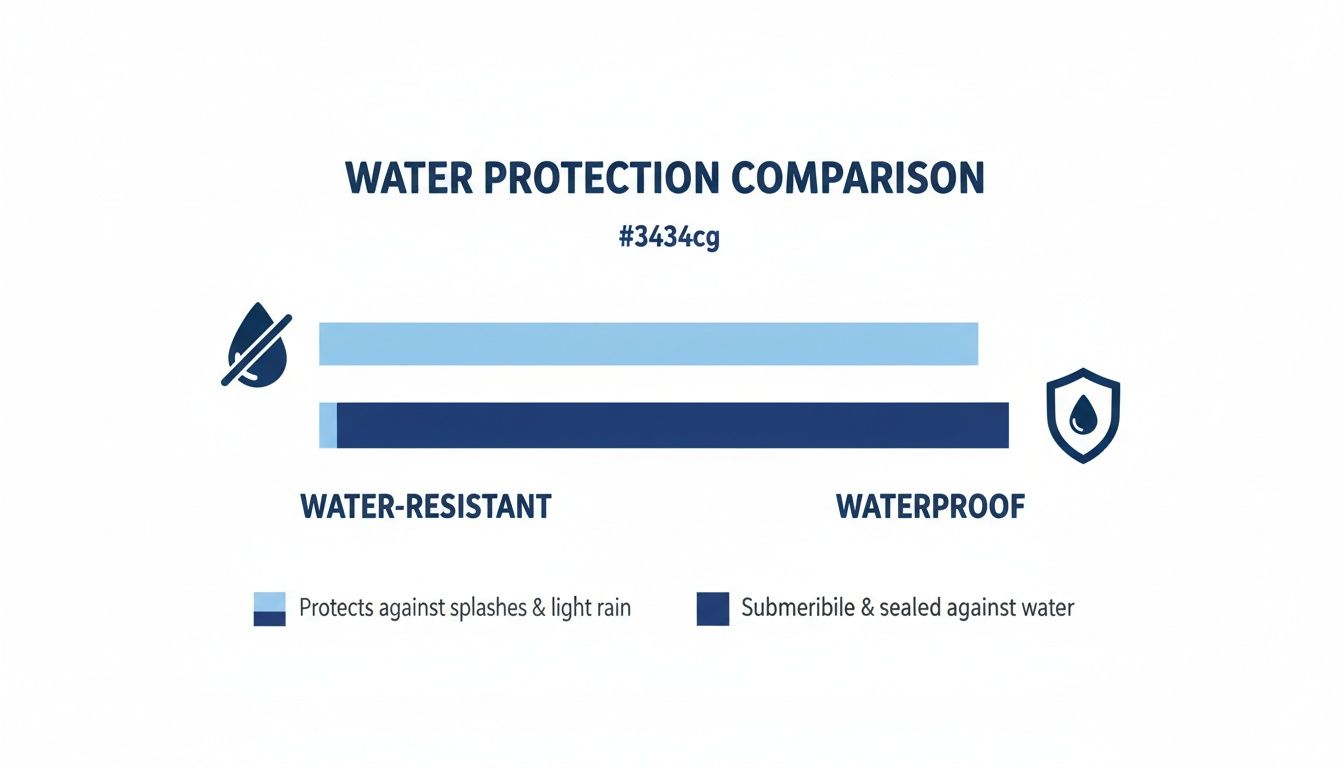
As you can see, 'water-resistant' is for temporary defense against light moisture, while 'waterproof' provides the complete, reliable barrier you need for serious weather.
Matching Waterproof and Breathability Ratings to Your Fishing
These numbers can seem abstract, so here’s a quick reference guide to help you match the right ratings to your specific fishing scenarios.
| Rating Level | Waterproof Rating (mm) | Breathability Rating (g/m²) | Best For These Fishing Conditions |
|---|---|---|---|
| Basic | 5,000 - 10,000 | 5,000 - 10,000 | Light rain, mist, or short showers. Good for casual trips or when you can easily take shelter. |
| Good | 10,000 - 15,000 | 10,000 - 15,000 | Moderate, steady rain and higher activity levels. A great all-around choice for most anglers. |
| Excellent | 15,000 - 20,000 | 15,000 - 20,000 | Heavy, persistent rain and high-exertion fishing like hiking, wading, or fighting big fish. |
| Pro-Level | 20,000+ | 20,000+ | Extreme conditions—think multi-day offshore trips, driving rain, and constant spray. Maximum protection. |
Choosing the right level ensures you're not overpaying for tech you don't need or, worse, under-geared when conditions get serious.
Understanding Fabric Construction
Beyond the numbers, the way the fabric is built plays a huge role in its durability and performance. This is where you run into terms like 2-layer, 2.5-layer, and 3-layer.
- 2-Layer: The waterproof membrane is bonded to the outer fabric, with a separate, loose mesh liner inside for comfort. You see this a lot in everyday rainwear.
- 2.5-Layer: This is like a 2-layer, but instead of a mesh liner, a thin protective print is applied directly to the membrane. This makes the gear lighter and more packable—great for stashing in a pack.
- 3-Layer: Here, the membrane is sandwiched and bonded between a tough outer fabric and a protective inner liner. This creates the most durable, rugged, and high-performing gear built for the harshest conditions.
For most serious anglers, a 3-layer garment is a worthwhile investment for its sheer toughness and long-term reliability. This kind of technology is what’s driving huge demand in the industry. The global fishing clothing market was valued at USD 15,001.3 million in 2021 and is projected to keep growing, fueled by anglers who demand better protection from the elements.
Choosing Gear That Fits Your Fishing Style
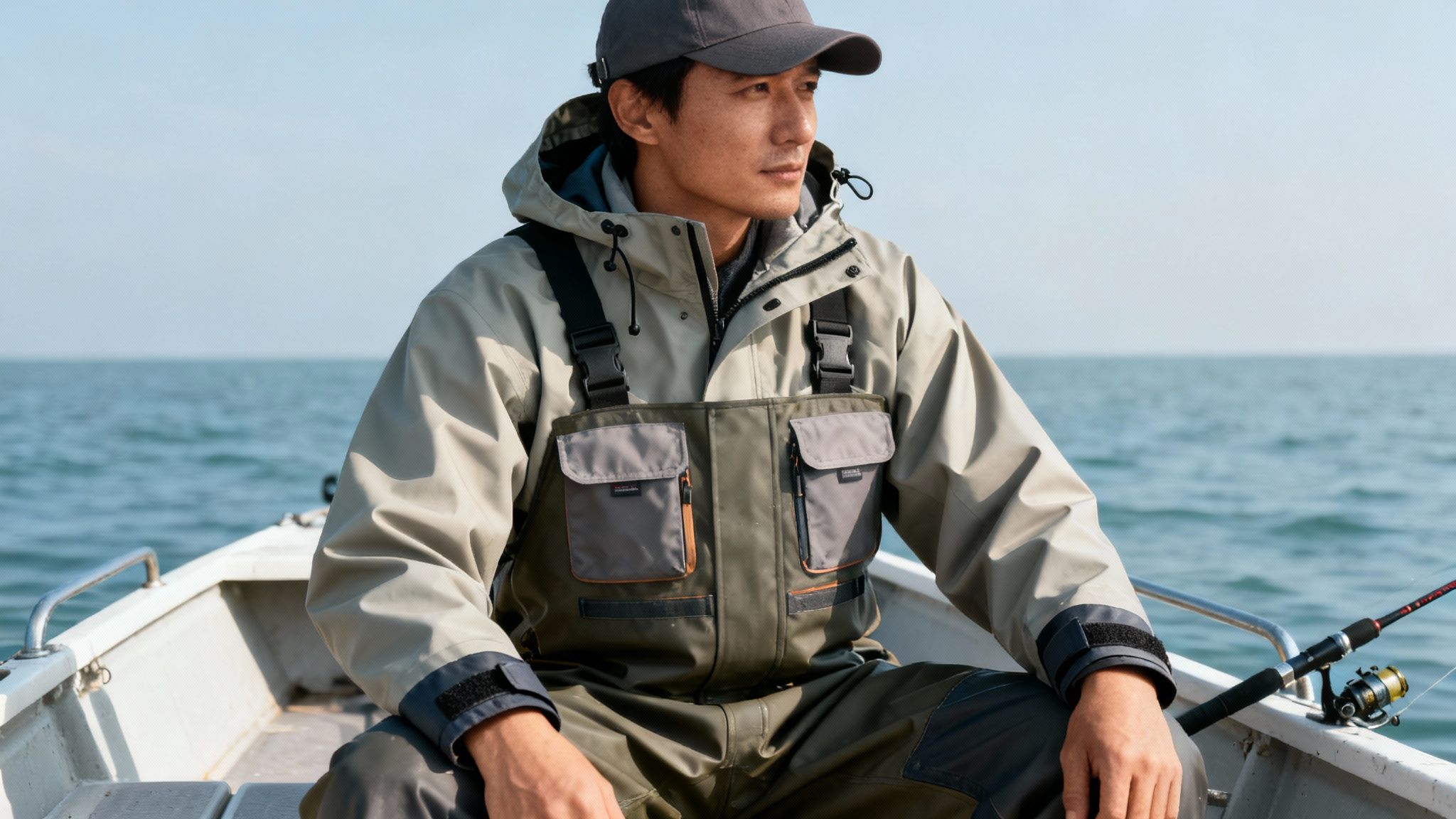 Not all fishing trips are created equal, and your gear should reflect that reality. The bombproof shell you need for a multi-day offshore battle in heaving seas is just dead weight on a calm lake morning. The key to staying comfortable and effective is matching your waterproof kit to your specific style of fishing.
Think about how you actually fish. Are you constantly moving, casting from a slippery deck, and changing spots? Or do you spend long hours sitting still, waiting for a bite in the cold? The answer is what guides you toward the right combination of jackets, bibs, and lighter shells.
Waterproof Fishing Jackets The Angler's Essential Armor
A quality waterproof fishing jacket is the cornerstone of any serious angler’s kit. But let's be clear: not just any rain jacket will do. You need gear designed with fishing in mind, which means it has specific features that make a real difference when you're hooked up.
Here are the non-negotiables:
- An articulated fit: This means the elbows and shoulders are cut to allow a full range of motion. You can cast, set the hook, and fight a fish without feeling like your jacket is fighting you back.
- Watertight cuffs: Cinch-down or neoprene cuffs are absolutely essential. They stop water from running up your arm when you reach into the water to land or release a fish—a small detail that prevents a miserable day.
- A well-designed hood: An adjustable hood that can cinch down over a hat and turn with your head is crucial for maintaining peripheral vision while running the boat or scanning the water.
The best jackets have pockets placed high on the chest. This keeps them accessible even when you're wearing waders or a full set of bibs. Trust me, it becomes a massive convenience when you need to grab your phone or a new lure in a hurry.
These purpose-built features are what elevate a simple rain jacket into a genuine piece of fishing equipment, keeping you focused and effective when the weather turns.
Fishing Bibs and Trousers For Full-Body Protection
For serious, head-to-toe protection, nothing beats a good set of waterproof bibs or trousers. This is especially true in heavy rain or when dealing with constant boat spray. While a jacket protects your top half, bibs provide seamless coverage from your chest down, completely eliminating that cold, wet gap that can form at the waist.
Bibs are the undisputed champ for boat anglers and anyone facing the harshest weather. Their high-cut design provides extra warmth for your core and guarantees total protection, no matter how you bend or move. Trousers, on the other hand, offer more mobility and are often preferred by anglers who do a lot of walking, wading, or climbing over rocks.
Trousers are gaining ground, with innovations like abrasion-proof materials and integrated knee pads catering to anglers who demand flexibility without sacrificing protection. If you need more pointers for a big day on the water, check out our guide on what to wear deep sea fishing.
Lighter Shells and Hoodies When Mobility Is Key
There are plenty of days when a full-blown, three-layer storm suit is simply too much. For those misty mornings, light-drizzle afternoons, or high-exertion situations, a lighter waterproof shell or a technical waterproof hoodie is a game-changer.
These garments prioritize breathability and packability. They’re easy to stuff in a bag until you need them, making them perfect for the mobile angler—someone hiking into a remote stream, kayaking a shoreline, or just trying to stay ahead of a moving school of fish. They provide that crucial barrier against wind and light rain without the bulk of a heavy-duty jacket, keeping you comfortable and on the move.
Mastering the Art of Layering for Any Weather
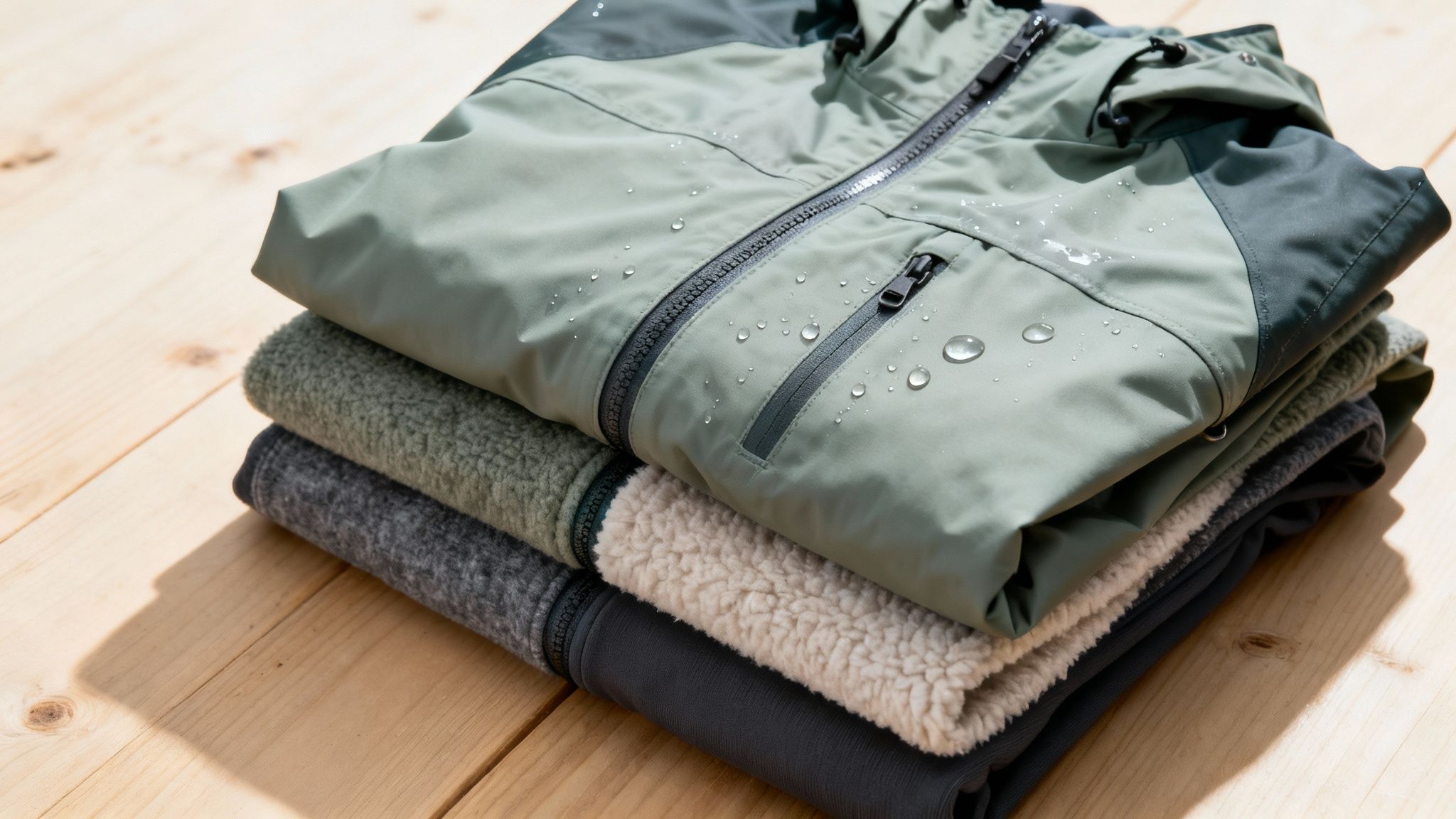 Your waterproof shell is a brilliant shield against rain and spray, but it’s only one part of the equation. Staying truly comfortable—and focused—on the water means managing moisture from the inside out. This is where a smart layering system transforms a good day into a great one, letting you adapt to changing conditions without a second thought.
The system itself is simple but brutally effective. It's built on three distinct layers that work in unison, each with a specific job: moving moisture, retaining heat, or protecting you from the elements. Once you master this approach, you can add or shed layers to regulate your temperature perfectly, ensuring you stay focused on the fish, not on feeling cold or clammy.
Your Foundation: The Moisture-Wicking Base Layer
Everything starts with what’s right against your skin. The primary job of this layer isn’t actually warmth—it's moisture management. As you cast, move around the boat, and fight fish, this layer has to pull sweat away from your body to keep you dry.
This is exactly why experienced anglers avoid cotton like the plague. Cotton is a sponge. It absorbs moisture and holds it against your skin, sucking heat from your body faster than you can imagine. Instead, you need materials designed to wick moisture away.
- Merino Wool: An incredible natural fiber that not only wicks sweat but also continues to insulate even when damp. As a bonus, it naturally resists odor.
- Synthetics: Materials like polyester and polypropylene are experts at moving moisture off your skin and they dry incredibly fast.
Think of your base layer as the critical foundation for your entire system. A good one keeps you dry, and staying dry is the first step to staying warm.
The Engine of Warmth: The Insulating Mid-Layer
Next up is your insulating layer. Worn right over the base, its job is to trap your own body heat, creating a pocket of warm air that keeps you comfortable when the temperature drops. The key here is versatility, because this is the layer you’ll add or remove most often as the day changes.
Again, the material choice is what matters. You need something that keeps insulating even if it gets a little damp and that allows moisture from your base layer to pass right through it.
Your mid-layer should be lightweight and adaptable. Fleece jackets, puffy vests with synthetic insulation, and thicker merino wool sweaters are all excellent choices. They provide maximum warmth for their weight without adding unnecessary bulk that could restrict your casting motion.
The Final Piece: The Protective Outer Shell
Finally, your waterproof jacket and bibs act as the outer shell. This layer is your armor against wind, rain, and spray. A high-quality shell needs to be completely waterproof yet breathable enough to let the moisture vapor passed along by your inner layers escape. Without that breathability, you’re just trapping sweat inside a plastic bag.
A perfect fishing day might start with all three layers on a cold, misty morning. As the sun climbs and you start moving around, you can shed the fleece mid-layer. When an afternoon squall rolls in, you zip the shell back up and stay perfectly dry and comfortable through it all. This adaptability is the true power of layering your waterproof clothing for fishing.
Keeping Your Waterproof Gear Performing Its Best
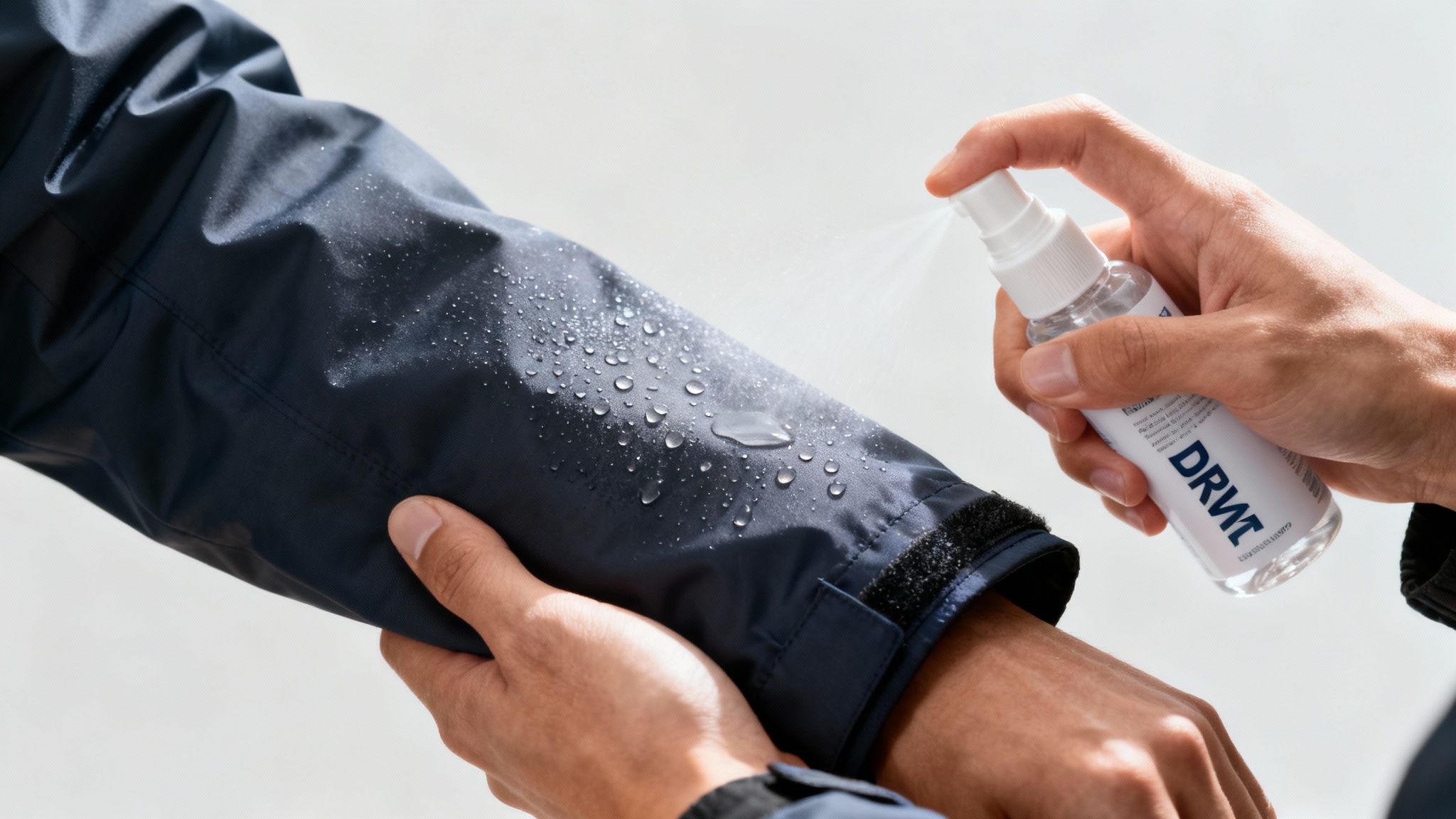 Your waterproof gear is a serious investment in your comfort and safety out on the water. Like any high-performance tool, it needs the right maintenance to keep delivering the protection you paid for. With just a little care, you can keep your jacket and bibs performing like new for years.
The biggest enemies of a waterproof-breathable membrane are the things you can't always see: dirt, body oils, and residue from campfire smoke or fish slime. These contaminants clog the microscopic pores in the membrane, killing its ability to breathe. Eventually, that buildup can compromise the waterproof barrier itself.
The Right Way to Wash Your Technical Gear
Regular household detergents are a huge no-go for technical apparel. Their surfactants, fragrances, and softeners are literally designed to leave residue behind. On your waterproof gear, this gunk ruins the DWR finish and clogs the membrane.
Instead, you need a cleaner specifically made for technical outerwear. These are gentle, residue-free soaps that clean the fabric without stripping its performance features.
- Prep Your Garment: Empty every single pocket. Close all zippers, snaps, and Velcro cuffs to prevent snagging during the wash cycle.
- Use the Right Cleaner: Grab a specialized tech wash and follow the instructions on the bottle for the right amount.
- Wash Gently: Run the gear by itself through a gentle cycle with cold water. You don't want it getting beat up by other clothing.
- Rinse Thoroughly: An extra rinse cycle is a good idea to make sure every last bit of soap is gone.
Proper cleaning is the first step in restoring water repellency and extending the life of your gear. This is even more critical if you're frequently in saltwater environments. If you want to dive deeper, you can learn more about caring for fishing gear used in saltwater to protect it from corrosion and wear.
Reviving Your Gear's Water Repellency
That magical beading effect you see on new waterproof gear? That’s the Durable Water Repellent (DWR) treatment at work. It’s a coating on the outside of the fabric that makes water bead up and roll right off—your first line of defense against rain.
Over time, DWR wears off from abrasion, dirt, and washing. You’ll know it’s failing when your jacket starts “wetting out.” The outer fabric gets soaked and looks dark, even if you’re still dry underneath. A wetted-out jacket can’t breathe, which is why you start feeling clammy and damp inside.
Pro Tip: After washing with a tech wash, tumble dry your garment on low, gentle heat for about 20 minutes. This heat can often reactivate the existing DWR treatment, bringing that beading action right back to life.
If a simple wash and dry cycle doesn't do the trick, it’s time to reapply. You can easily find wash-in or spray-on DWR revival products. Just clean your garment first, follow the product instructions carefully, and your gear will be shedding water like it’s brand new again.
Common Questions About Waterproof Fishing Gear
Even guys who have spent decades on the water have questions about their rain gear. The tech is always changing, and a few key insights can make a huge difference in staying dry and making your gear last. We hear the same questions all the time, so here are some straight-up, no-nonsense answers.
What Is the Real Difference Between Waterproof and Water-Resistant?
Think of water-resistant as your gear for a light fog or the occasional boat spray. It’s treated to shed a little water for a short time, but any real, sustained rain is going to soak right through. It’s better than wearing a t-shirt, but you can't count on it.
Truly waterproof gear is a whole different ballgame. It has an internal membrane that acts like a wall, completely blocking water from getting in, even when you're leaning against a wet gunwale. Just as important, it has taped or welded seams that seal up all the tiny holes made by the stitching needles. For any serious fishing, waterproof is the only way to go.
How Do I Know When to Reapply DWR on My Jacket?
You’ll know it’s time when your jacket starts to “wet out.” That’s when water stops beading up and rolling off and instead starts soaking into the outer fabric, making it look dark and feel heavy.
Even though the membrane inside is still keeping you dry, a wetted-out jacket can’t breathe. All that sweat vapor gets trapped inside, and you end up feeling clammy and damp from your own perspiration. The easiest test is to just flick a few drops of water on the shoulders. If they soak in instead of beading up, it’s time for a proper wash and a fresh DWR treatment.
A lot of guys think their jacket is leaking when it wets out. Most of the time, the DWR has just worn off from use. A simple spray-on or wash-in treatment will bring it right back to life.
Can I Just Wear a Cotton Hoodie Under My Fishing Jacket?
Please don't. Cotton is hands-down the worst material you can wear for any activity where you might sweat or get wet. It’s a sponge—it soaks up moisture and loses every bit of its ability to keep you warm.
A wet cotton layer will literally pull heat away from your body, leaving you cold, miserable, and even putting you at risk in cooler weather. Always reach for a synthetic fleece or a merino wool mid-layer. Those materials move moisture away from your skin and keep insulating even when damp, keeping you warm and dry from the inside out.
Is More Expensive Waterproof Fishing Gear Always Better?
Not always, but when it comes to peak performance and gear that lasts, you definitely get what you pay for. A higher price tag usually gets you a more advanced 3-layer fabric with much better waterproof (20,000mm+) and breathability ratings. It also means you’re getting angler-specific features like watertight cuffs, pockets placed where you can actually use them, and a fit designed for casting all day.
That said, the weekend angler fishing in decent weather doesn’t need a pro-grade offshore suit built for a hurricane. A quality, mid-range jacket and bibs with solid waterproof ratings will do the job just fine. The "best" gear is whatever best fits your kind of fishing and your budget.
Ready to gear up for your next day on the water? Explore the full collection of performance apparel at Lake Pacific and find the perfect pieces to keep you comfortable and focused, no matter what the weather brings. Check out our gear at https://www.lakepacificgear.com.